
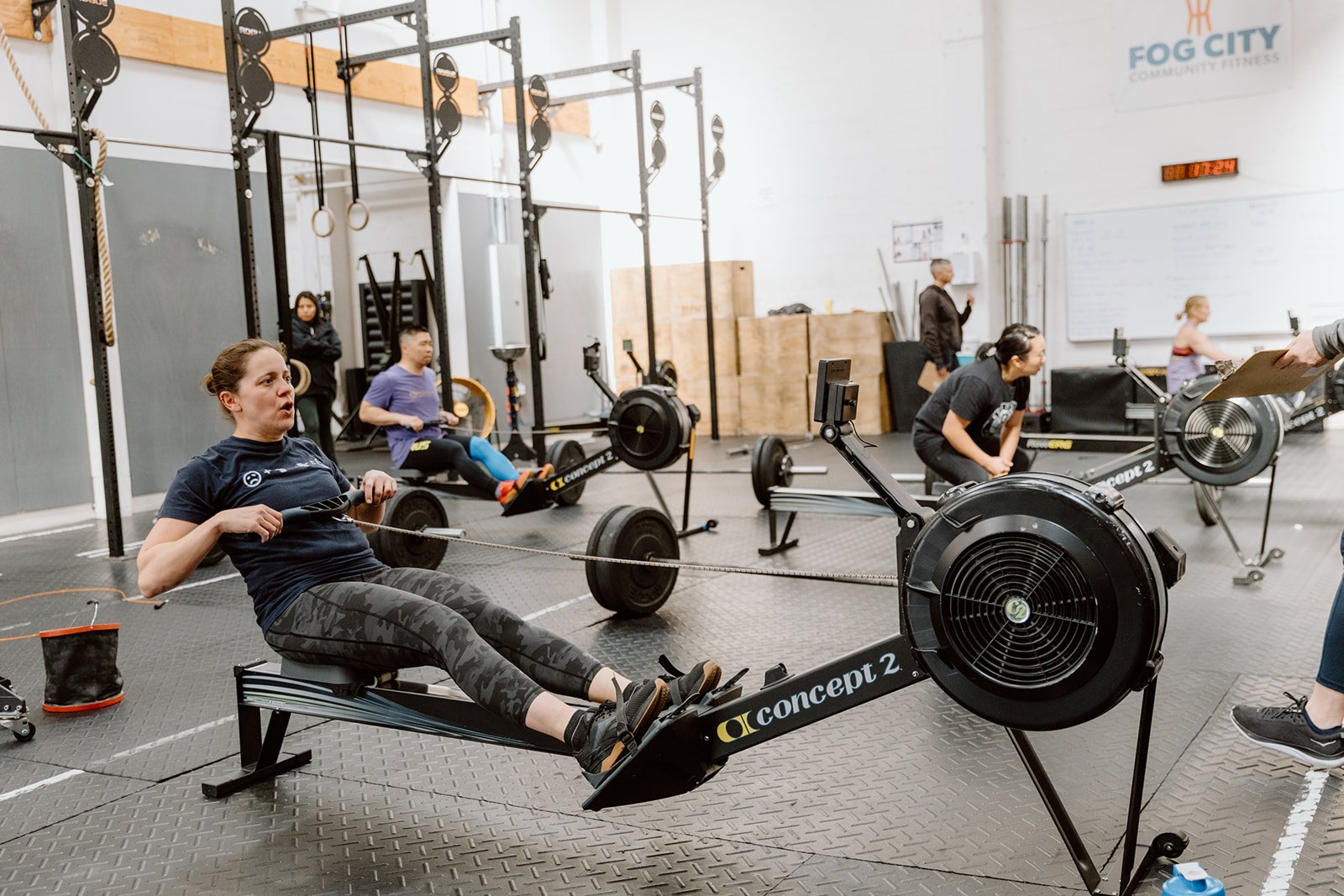
Workout of the Day
Gym Parking: Friday Through Sunday
Some of you have seen the signs that have been placed on our block indicating "No Parking" from Friday through Sunday (June 24 - 26) from 6am until 4pm. This will obviously affect those who attend morning and noon classes on Friday, as well as Saturday and Sunday morning classes.
The best parking alternative during this time will likely be the same suggestion we've posted before - Evans Avenue, just off of Cesar Chavez. Evans is actually a great gym parking option at any time, not just during random periods of "no parking" enforcement (folks who regularly come to Wednesday and Friday noon classes can benefit when street cleaning is in effect up the hill on Connecticut, forcing some of those cars to move down the hill and occupy more of the spots closer to the gym).
Evans Avenue puts you just 1,000 feet or so away from the gym (through two crosswalks), and there's almost always plenty of free parking available - check out a visual orientation by clicking here:

WOD for 06-23-16:
Press in Snatch:
3-3-3
For Quality
-then-
2 Power Snatches + 1 Squat Snatch:
5 Sets of (2+1)
Climbing
-then-
"Power Snatch Annie"
For Time:
5-4-3-2-1
Power Snatches @ 155/105 lbs
50-40-30-20-10
Double Unders
AbMat Sit-ups
(Compare to 06-12-15 and 12-01-13)
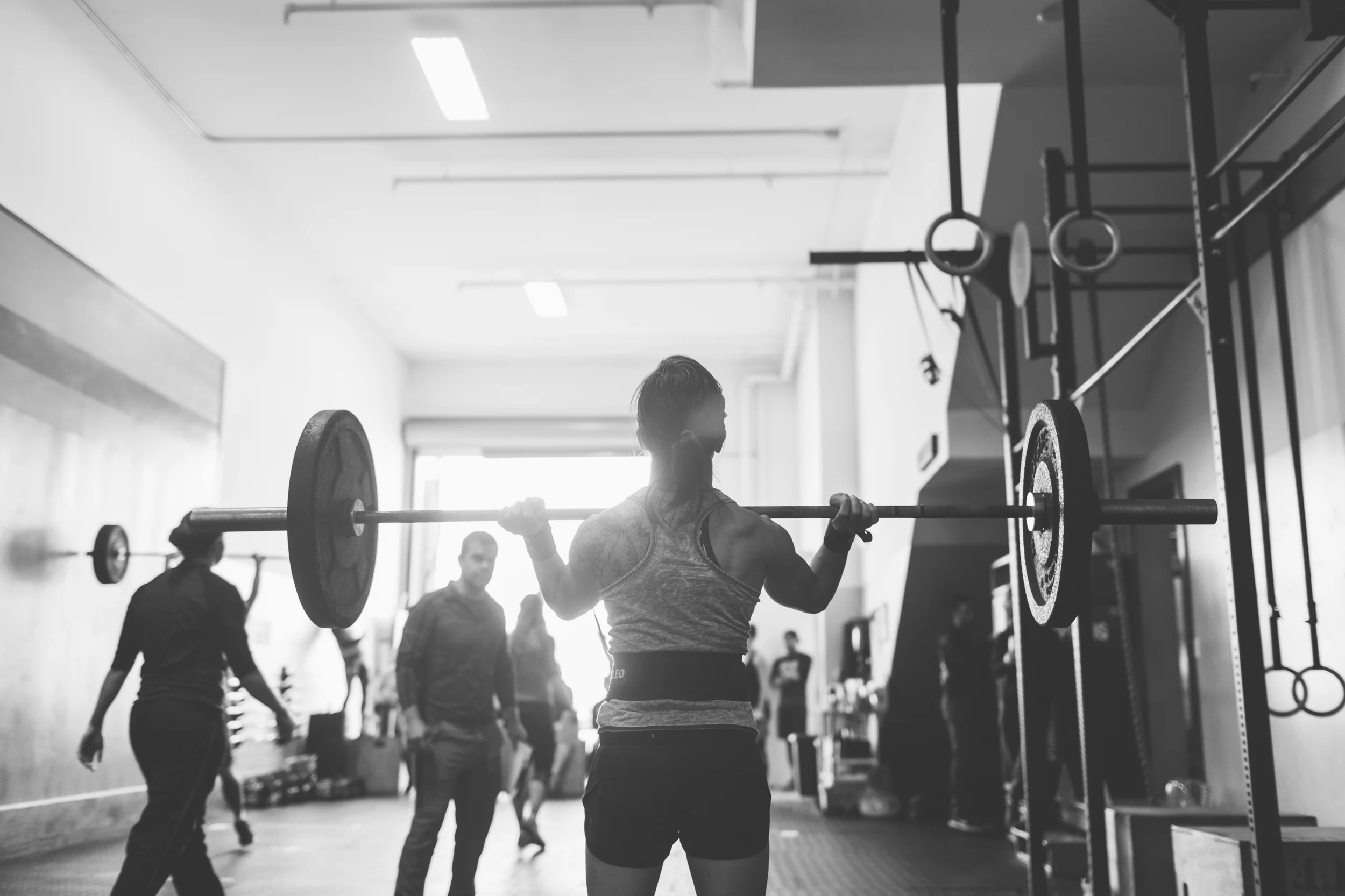
Wednesday Strength Day: Front Squat + Back Squat
I think it's only fair that if we post "The Iron" on Tuesday that we squat all the weights on Wednesday. Wouldn't you agree?
WOD for 06-22-16:
Front Squat:
7-7-5-3
Climbing
-then-
Back Squat:
7-7-5-3
Climbing
If completing the workout as prescribed, treat this as eight total climbing sets (i.e. the bar only goes up in weight), with no "in-between sets" (AKA "test sets") once the first set of seven front squats has been taken. For example:
Front Squat 7x155, 7x195, 5x225, 3x245
directly into
Back Squat 7x255, 7x275, 5x290, 3x300
If this is not feasible (please be smart) then reduce the loading as needed when starting the back squats, and then climb again in weight to a heavy set of three.
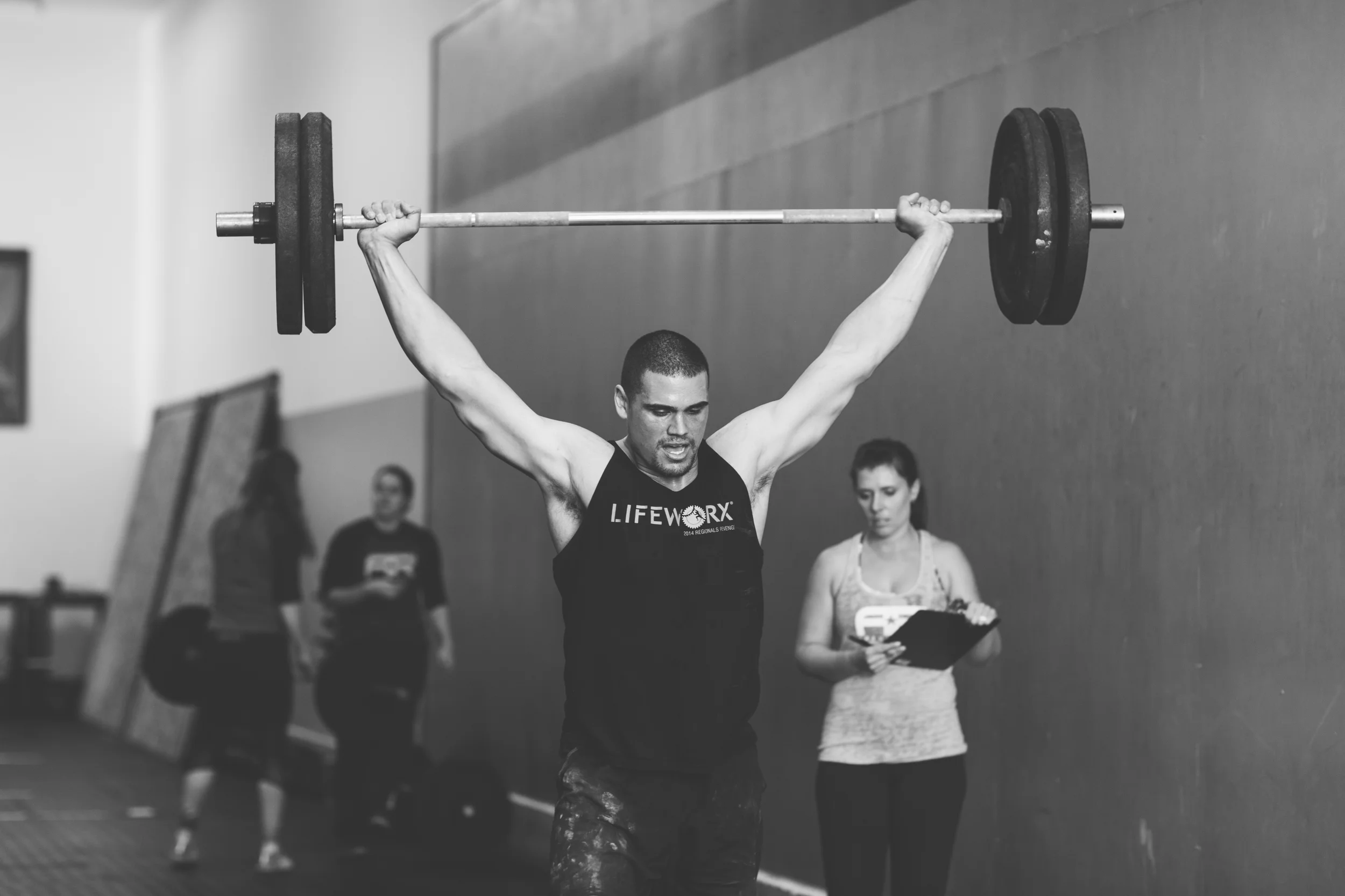
The Iron
Yesterday's post that included a quote from Henry Rollins prompted a few people to ask me about the old article "The Iron" - one of my favorites from Rollins. So I thought I'd share it again on this blog for those who have not read it previously. The full article can be found here if you're interested in reading it, but here are a few excerpts that I enjoy:
It took me years to fully appreciate the value of the lessons I have learned from the Iron. I used to think that it was my adversary, that I was trying to lift that which does not want to be lifted. I was wrong. When the Iron doesn't want to come off the mat, it's the kindest thing it can do for you. If it flew up and went through the ceiling, it wouldn't teach you anything. That's the way the Iron talks to you. It tells you that the material you work with is that which you will come to resemble. That which you work against will always work against you.
It wasn't until my late twenties that I learned that by working out I had given myself a great gift. I learned that nothing good comes without work and a certain amount of pain. When I finish a set that leaves me shaking, I know more about myself. When something gets bad, I know it can't be as bad as that workout.
I used to fight the pain, but recently this became clear to me: pain is not my enemy; it is my call to greatness. But when dealing with the Iron, one must be careful to interpret the pain correctly. Most injuries involving the Iron come from ego. I once spent a few weeks lifting weight that my body wasn't ready for and spent a few months not picking up anything heavier than a fork. Try to lift what you're not prepared to and the Iron will teach you a little lesson in restraint and self-control.
I have never met a truly strong person who didn't have self-respect. I think a lot of inwardly and outwardly directed contempt passes itself off as self-respect: the idea of raising yourself by stepping on someone's shoulders instead of doing it yourself. When I see guys working out for cosmetic reasons, I see vanity exposing them in the worst way, as cartoon characters, billboards for imbalance and insecurity. Strength reveals itself through character...
...Muscle mass does not always equal strength. Strength is kindness and sensitivity. Strength is understanding that your power is both physical and emotional. That it comes from the body and the mind. And the heart...
...Learning about what you're made of is always time well spent, and I have found no better teacher. The Iron had taught me how to live. Life is capable of driving you out of your mind. The way it all comes down these days, it's some kind of miracle if you're not insane. People have become separated from their bodies. They are no longer whole.
I see them move from their offices to their cars and on to their suburban homes. They stress out constantly, they lose sleep, they eat badly. And they behave badly. Their egos run wild; they become motivated by that which will eventually give them a massive stroke. They need the Iron Mind.
Through the years, I have combined meditation, action, and the Iron into a single strength. I believe that when the body is strong, the mind thinks strong thoughts. Time spent away from the Iron makes my mind degenerate. I wallow in a thick depression. My body shuts down my mind
The Iron is the best antidepressant I have ever found. There is no better way to fight weakness than with strength. Once the mind and body have been awakened to their true potential, it's impossible to turn back.
The Iron never lies to you. You can walk outside and listen to all kinds of talk, get told that you're a god or a total bastard. The Iron will always kick you the real deal. The Iron is the great reference point, the all-knowing perspective giver. Always there like a beacon in the pitch black. I have found the Iron to be my greatest friend. It never freaks out on me, never runs. Friends may come and go. But two hundred pounds is always two hundred pounds.
-Henry Rollins
Catalyst Athletics interviewed Henry Rollins in 2011, and those of you who are familiar with The Iron and some of Rollins' other work may find the interview an interesting quick read (check it out here).
WOD for 06-21-16:
(Bent Over) Barbell Row:
6-6-6-6
For Quality
-then-
"Heavy Helen"
3 Rounds For Time:
400m Run
21 Kettlebell Swings @ 70/53 lbs
12 Chest-to-Bar Pull-ups
Motivation Monday: No Such Thing As Spare Time
The good folks at Power Athlete HQ once wrote some choice words for those who like to use the phrase "I don't have time..." (click here for their blog post titled No Time? But Do You Have Time To GFY?). As you can tell from the article's title it's pretty unapologetic, but if you can get past the aggressive language I think there are some gems of actual wisdom:
...our days are no different than those of the common folk. We have lives, families, and extracurricular commitments. We have to train, test programs, coach, take phone calls, write blogs, run accounting, travel, build software, brush our teeth, get our hair cut, raise kids, feed dogs, do yard work and most importantly SLEEP. Life is busy. Life is chaotic. There’s no good way to get anything done any more. But we all make time for our training...
We have members at Arena Ready who regularly inspire me by the way that they consistently MAKE TIME to train. To prioritize their fitness. To put their health first. They have demanding careers, and long daily commutes, and children, and pets, and travel schedules, and all of that. Yet they are still here, in the gym, every week... week after week.... month after month... year after year. They make it hard for me to go home after a long day, and just close up shop without working out... without putting my own health first. They make me think "do I really want to tell myself tomorrow that I just didn't make the time?"
"I don't have time (to work out)" is a phrase we hear often, particularly from individuals who are interested in starting CrossFit and possibly joining AR. We try to take a more sympathetic and open-minded approach than our friends at Power Athlete HQ when attempting to help folks see that they must MAKE the time - but in the end, the message is essentially the same. As Henry Rollins is quoted in the Power Athlete HQ post:
"No such thing as spare time.
No such thing as free time
No such thing as down time.
All you got is life time.
Go."
WOD for 06-20-16:
Alternating EMOM for 5 Rounds (10 Minutes):
Minute 1: 3 Clusters, climbing
Minute 2: Strict Ring Dips, pick number
-then-
2 Rounds For Time:
20 Calorie Row
20 Clusters @ 115/80 lbs
10 Muscle-ups

ATI Summer Solstice Throwdown
Good luck to Tony and Coach Sarah who will be competing at the "4th Annual CrossFit ATI Summer Solstice Throwdown" on Saturday in Danville! If you're around on Saturday and would like to head over to cheer them on, here's the event location:
CrossFit ATI
462 Hartz Avenue
Danville, CA 94526
Check the Arena Ready private Facebook page for heat times as we learn of them.
Have fun, Tony & Sarah, and get your competitive functional fitness on!
WOD for 06-18-16:
On a Running Clock For Max Reps...
A) From 0:00 - 9:00 (Against a 9-Minute Clock):
1200m Run
30 Toes-to-Bar
Max Reps Lateral Bar Burpees
(Rest 2:00)
B) From 11:00 - 18:00 (Against a 7-Minute Clock):
800m Run
30 Deadlifts @ 155/105 lbs
Max Reps Lateral Bar Burpees
(Rest 2:00)
C) From 20:00 - 25:00 (Against a 5-Minute Clock):
400m Run
30 Wall Balls @ 20/14 to 10/9 ft
Max Reps Lateral Bar Burpees
The Hook Grip: "It's Like You're Cheating"
Last week there was a lot of conversation around the hook grip, so I figured it was about time for a re-visit...
A couple of years ago one of our members watched Big Tony and Coach Sarah do the WOD "Isabel" (30 Power Snatches For Time @ 135/95 lbs) unbroken in a little over one minute... which means to say they didn't let go of the bar once. This person was astonished and asked me, "How the hell did they hold on to the bar for all 30 reps?!"
My answer was two-fold, "Well, they've both spent 15+ years getting really freakin' strong. And, perhaps even more so in this specific case, they both have a solid hook grip on the bar."
Then Tony chimed in, with the most humble tone you could imagine when saying something so jarring, "Yeah man, the hook grip. It's so easy to hold on the bar with a hook grip. It's like you're cheating."
I'm not sure I would go so far as to say it's like you're cheating, but I'm also not as strong as Tony is, so I've never held on to thirty 135-pound snatches in a row, heh. But oh man when you need that hook grip on some heavy and/or high rep cleans or snatches, and you've got the technique of it down, it feels pretty damn close to holding on to the bar with a strap:
The hook grip is a bit uncomfortable at first, and can put some stress on the thumbs, so newcomers often disregard it and go back to just holding the bar without it. The problem with that is once your strength and fitness has progressed to a point where the weights are heavy (and/or high rep) enough to require a hook grip, you will have trained yourself to lift without it - and will then have a really difficult time trying to implement it by changing your old habits. It's like trying to tell a fairly high-level tennis player who has smacked their forehands with an Eastern grip for their entire playing career to switch to a Western grip. Good luck with that. The only difference is that in tennis there are examples of high level athletes having success with both grips (although very few use an Eastern grip anymore), but in both Olympic-style weightlifting and CrossFit the top level people ALL use the hook grip - there is no alternative. Well, other than not being able to hold on to the bar.
Part of the thumb discomfort eventually goes away once your hands adjust to the grip, and the soft tissue around the thumb adapts a bit to accommodate the position. We never want your thumbs to be in actual pain (which is why we have new athletes ease into it), but we do want you to know that the annoyance of the grip does fade over time.
The discomfort can also be mitigated by taping your thumbs. There are many different ways to tape your thumbs for hook gripping, and different athletes have their own preferred tape and wrapping methods, so you may have to find what works best for you. The greatest CrossFitter on earth, who also happens to be a pretty darn good weightlifter as well, tapes his thumbs the way I teach most people to - it's simple, quick, and doesn't require a lot of tape:
And on that note...
WOD for 06-17-16:
3-3-3
For Quality
-then-
2 Power Snatches + 2 Overhead Squats:
5 Sets of (2+2)
Climbing
-then-
For Time:
15-12-9
Power Snatches @ 115/80 lbs
Overhead Squats
Rowing Tips From Coach Hillary
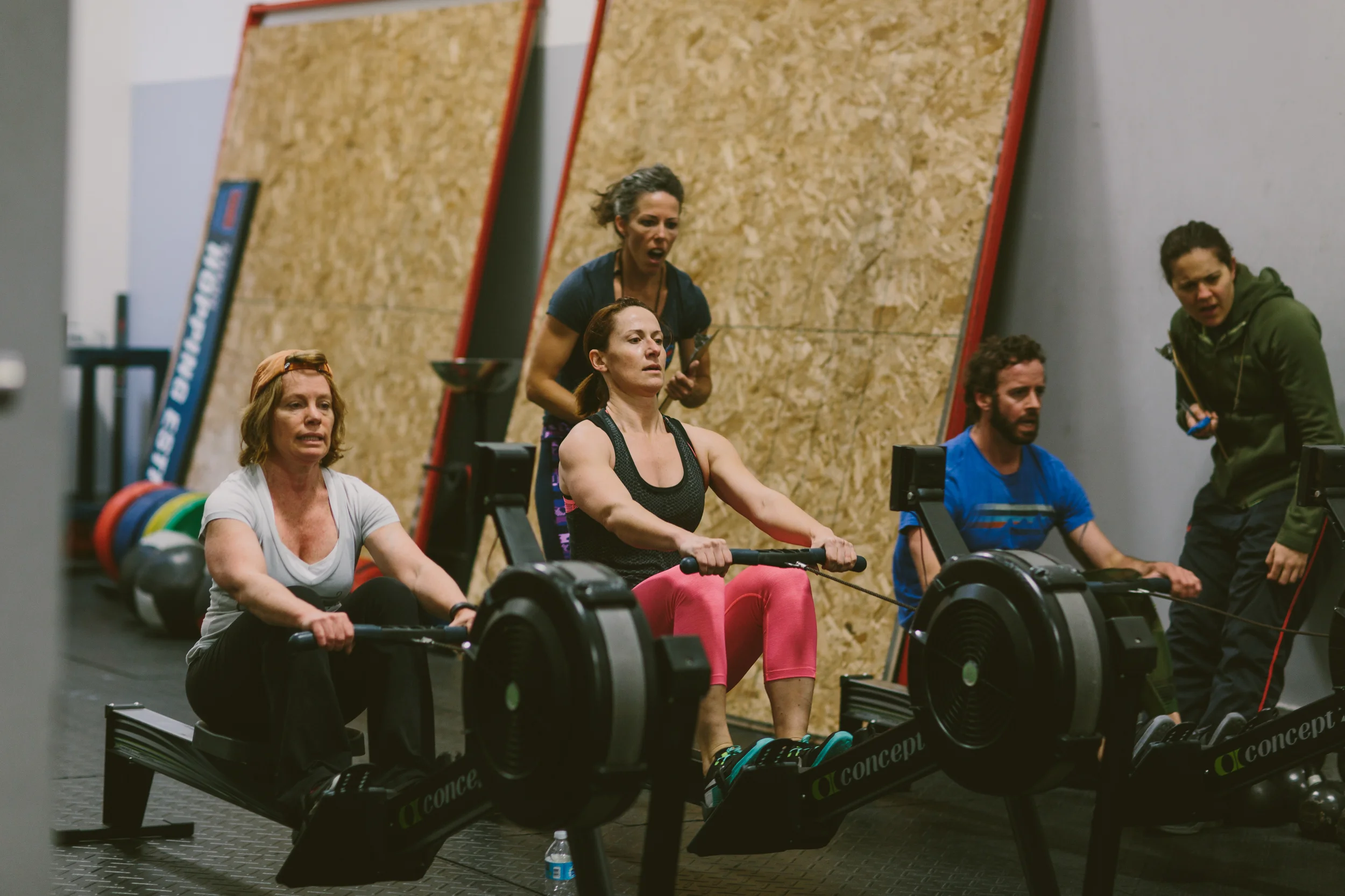
A while back Coach Hillary, our resident rowing coach extraordinaire (former NCAA Division-1 collegiate rower and collegiate rowing coach), shared some valuable rowing tips for our athletes. Here is that post again, just in time for Thursday's WOD:
Gah, make it stop!
So now that Rob's let on that I have some rowing experience and can work miracles for your erg times I thought I'd share what I know and quickly bring you all back to Earth on that dream of having a sub-6 min 2k (That's rowing lingo for the standard distance of crew races: 2000m and is the erg test time that people ask you about if you say you're a rower, akin to the "Fran" time in CrossFit). I rowed for 8 years through high school, college, and coached Novice Rowing at a Division III school for a year exclusively in the Northeast so I've spent a lot of time on ergs with Winter limiting time on the water. I've been out of the rowing game for some time now though so what I can share are the basics of what I've found helpful over the years and encourage you to ask our awesome coaches/athletes crushing rowing WODs for feedback.
CrossFit from the early days has embraced erging as one of the main mono-structural exercises to test cardio-respiratory fitness. And like any movement in CrossFit, technique can be utilized to keep you safe, get you fit, and hitting PRs or can be forgotten, lead to injury, and make peoples eyes hurt (see video above).
Thankfully most everyone at AR has a good technique base and just need some understanding of the mechanics, drills for refinement, and time for reinforcement.
Here's three main concepts that have been drilled into me through the years that have stuck with me:
1) Muscle Sequence
Just like many of our barbell movements in CrossFit, proper sequencing of the major muscle groups in rowing is key to optimal force. Legs, back/chest, then arms, does that sound familiar? Rob and Sarah have posted a great resource here that walks through the correct sequencing and positions through the drive and recovery so I won't rehash that but it's worth a review before we work this with drills.
2) Suspension on the Oar/Handle
This one doesn't get talked about as much from what I've heard in CrossFit but was one of my Coach's favorite things to harp on and was key for some of us getting our legs to drive first before engaging our trunk. She'd yell "HANG ON THE OAR" and have us do drills where we'd practice standing up on the foot stretchers so that we'd have all our weight hanging on the oar with our glutes off the seat for a split second. The idea was if you're not feeling that suspension, there's some slack in the system that leads to inefficiency (Think of not being on tension when doing a barbell lift = not pretty and no fun!).
Here's a snippet from a pretty good article (though super nerdy) that helps explain this a bit more.
"There are three distinct forces that act on the rower: forces exerted at the foot, the seat and the hand. Force is generated directly at the foot stretcher and the rower acts as the mechanical link between the force exerted at the foot stretcher and the force transferred via the hands into the oar. The force transitioned into the oar via the hands is dependent on the force exerted on the foot stretcher and the acceleration of the body (Baudouin & Hawkins, 2002)."
So think of standing on that foot stretcher as well as pulling on the oar. If you're lost, don't worry, we'll show you what we mean in person.
3) Stroke Length and Pacing
Force = distance/ time so the longer your pull is the more force can be produced (yay for tall gangly people/sorry minis!). While this may seem intuitive, it can be one of the harder things to do when we're trying to set PRs and compete with the person next to us, the natural tendency during high intensity is to speed up the stroke rate which leads to a shorter pull and ultimately less force as we can't maintain the pace that would result in the same force at a lower rate. Here's more on why this happens from the same article linked above:
"As suggested, technical efficiency decreases as stroke rate increases. This occurs for a number of reasons; physiological demands increase at a higher SR, transfer of mass from bow to stern (finish to catch) happen faster and technically demanding aspects of the rowing stroke occur more frequently with less time for consideration of the rower."
Good news is there's a Stroke Rate number on ergs so this is something you can work easily once you're aware.
If you can master all of these concepts, you'll be in great shape to set some PRs and show the CrossFitters what's up at your next competition. I look forward to seeing it happen! Finally, I'd be remiss if I didn't share what the real sport of rowing looks like. It's a bit long but here's the US Womens 8 winning the 2015 World Championships for a record 10th straight year beating out Canada with a lower Stroke Rate :)
WOD for 06-16-16:
Row Technique:
A) 10 Minutes of Skills & Drills
B) Max Meters in 5 Pulls
-then-
2 Rounds For Time, With a Partner:
1000m Row
150 Walking Lunges
150 Double Unders
Only one partner working at a time. Split the row and reps in any fashion you see fit.
Variance, Weightlifting, and Getting Better: Summer 2016 Edition
This is a very slightly modified version of a post that I wrote three years ago. I think the concepts are as true now as they were then, especially given the growth and progress of our athletes in that time. I hope it's helpful or at least mildly interesting.
2016 has been a pretty cool year thus far. We set some baseline markers in the winter & spring, tested and measured our fitness in the worldwide CrossFit Open, crushed an integrated 8-week squat cycle that gleaned dozens of 200+/300+/400+ back squats (including a handful of double bodyweight lifts) and then embarked on our current cycle of programming (hello classic CrossFit and increased volume of Olympic-style lifts and basic gymnastics!) which has already seen many PRs from those who have consistently put in the work at the gym.
Keeping the class programming varied and effective for everyone, while integrating a purposeful weightlifting template & layering in skill/bodyweight/gymnastics/agility pieces and dynamic conditioning, has always been a fun experience for Sarah and me (grammar PSA, sorry I can't help it).
As coaches we're often asked by athletes how they can get better... stronger, faster, fitter. Our answer is always some form of the same sentiment: know what you're training for (i.e. what are your goals?), stick to a trusted program, work hard, be consistent, and be honest with yourself. Not sexy, I know. People usually want to hear a magical revelation-- some form of a silver bullet that is the path of least resistance and can provide a quick fix. Something like "follow Starting Strength for a month," or "get on Wendler 5-3-1 for a couple of waves," or "stop running and start doing only [fill in the blank]", or conversely "stop doing [fill in the blank] and just start running all the time." It's easier to think that a new program, methodology, or training regimen will fix everything ASAP, than to think harder work and more consistency will. We call this the "shiny new object syndrome." The truth is that the answer is usually simpler than one thinks, and more straightforward than they care to accept.
Glenn Pendlay is credited as being one of the best weightlifting coaches in America over the last decade or two. He has coached countless lifters to national and international success, and he tips his hat to CrossFit for increasing awareness around - and breathing new life into - the sport of Olympic weightlifting. In short, legions of CrossFitters and weightlifters alike hang on his every word-- whether it be about technique, training, programming, or whatever he chooses to discuss in a public forum. And with good reason-- he is a leader in the community of weightlifting and a champion of the positive influences CrossFit has made. Years ago on his blog he once discussed how his lifters train-- if you're interested I suggest you take a quick read. Now these are high-level Olympic weightlifters mind you, so they are athletes training for that specific sport, and the goals of their program are geared as such-- so bear in mind that their training has far less variance, and much more specificity, than does ours.
If you read Coach Pendlay's post linked above, you'll realize that (even with his sport-specific methodology) there are many common themes with what a lot of you are already doing at Arena Ready. Pick up heavy things often. Perform the Olympic-style lifts regularly. Squat. Work on overhead strength (and mobility). Volume and rest. Light and heavy. Power variations. If you want to get better at weightlifting you're in luck-- AR programming integrates classic progressions with proven methods in order to target proficiency (and for some, eventually mastery) with the Olympic-style lifts. We've sent multiple athletes to US Nationals and the American Championships, qualified lifters for the Masters Nationals & Worlds, and taught newcomers to strength & conditioning how to snatch and clean & jerk with better technique than you'll likely see in most non-weightlifting specific gyms. But don't take my word for it-- ask any one of the people who have PR'd their squat, snatch, clean, or jerk in recent months (or even their "Nasty Girls", "Diane", or "Murph" times). Funny thing is, the better they get at Olympic weightlifting-related stuff the better they get at other stuff too: muscle-ups, handstand push-ups, jumping, running, pulling from the floor, balance, agility, speed, flexibility, stability, coordination. Weird. It's like the Olympic lifts train athleticism or something.
What if you don't care about Olympic weightlifting and you just want to show up and workout and get fitter? Great. Show up. Work hard. Take your recovery (nutrition, sleep, mobility, rest days, etc.) seriously. That's the beauty of an integrated program which prioritizes variance in an effort to increase your work capacity across broad time, age, and modal domains. That's fancy talk for saying that the normal class workouts are geared toward making you better at just about any physical (and in many ways mental) challenge life can throw at you. You train hard inside of AR so you can be better outside of AR.
We coaches and owners worry about what to cram into the hour of training you spend here so that you don't have to - we painstakingly develop and write the programming with the goal of getting you better over time at as many things as possible. Steady, sustainable, smart progress. Varied, not random. Effective, not trendy (to paraphrase our friend Pat Sherwood). In most cases simple and (hopefully) elegant, not overly fancy or novel (i.e. we don't mindlessly throw fifty movements at you in one workout/day/week in an attempt to break you in a "cool new way"). We approach the months and years of training from a big picture standpoint, and fill in the weeks and days with specifics that contribute to the overall goal. We monitor the light days, the heavy days, the long aerobic days, the high intensity days, the work/rest days, the skill focused days, the highly technical and not so highly technical days, the pulling days, the pushing days, the high volume days, the low volume days, and on and on and on. WE FOLLOW THE PROGRAMMING OURSELVES. We know how the workouts feel and what the intended stimulus is, every day. Our competitive level athletes take classes 5-6 times per week, they don't follow outsourced programming during Open Gym, nor do they try to cram mindless extra volume on top of what they're already doing in an effort to simply do more stuff (the end result of that for most athletes is usually a decreased intensity in training). It's worked pretty well over the years from top to bottom - from high-level CrossFit Games Regional athletes to the brand new, de-conditioned athlete who just started CrossFit at AR.
So whether you're training to be competitive at CrossFit, Olympic weightlifting, GRID, any number of other specific sports, or simply to be the fittest person in your office, make sure your consistent hard work is in line with your goals. Then trust in the program, put your best efforts into the training, enjoy the camaraderie along the way, and celebrate the results.
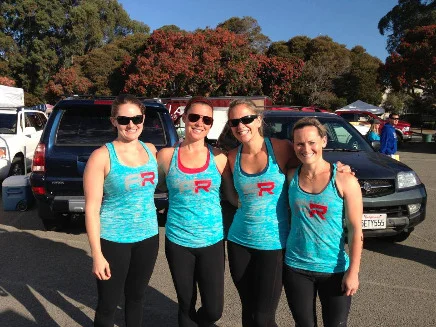
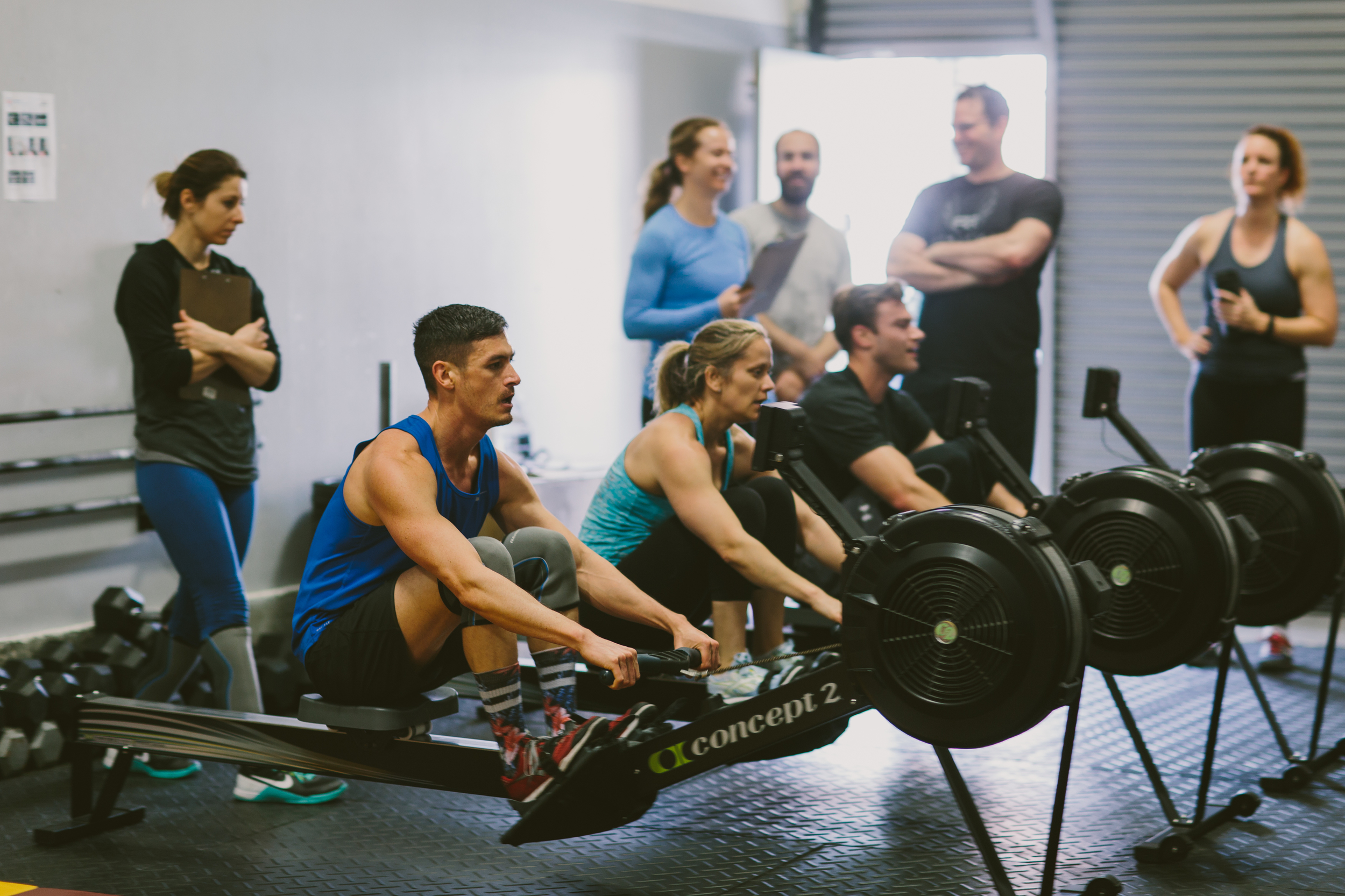
A throwback photo of a few of the AR ladies who have been with us for a while, and who are still getting better every day... through consistent hard work, smart training, and having a helluva lot of fun along the way.
You'd think that after all that soapboxing Wednesday's WOD would include a bunch of snatching or cleaning to drive my point home with a tidy segue. Well, you'd be wrong in this case, but I like where your head is at - after all, we're talking about variance, right?
WOD for 06-15-16:
Alternating EMOM for 5 Rounds (10 Minutes):
Minute 1: Strict Pull-ups, you pick the number
Minute 2: 12 Hollow Rocks
You pick the number for strict pull-ups. Feel great? Go for a max set. Not so much? Break it up as needed and get the strict pulling work in. In other words, take what's there today - but move well regardless.
-then-
Alternating EMOM for 5 Rounds (20 Minutes):
Minute 1: 15 Kettlebell Swings @ 70/53 lbs
Minute 2: 10 Burpee Box Jumps @ 24/20 in
Minute 3: 200m Sprint
Minute 4: REST
Face the box on the burpee box jumps. Dial up the speed on the 200m sprint if you have juice left in the tank.
Zatsiorsky, Scaling, and Power
Originally published six years ago, the article "Zatsiorsky, Scaling, and Power" by Jon Gilson (founder of Again Faster and former member of the CrossFit HQ Seminar Staff) is as useful today as it was back in 2010. Check it out:
You could struggle like a rocket trying to take off on regular unleaded, or you could actually get stronger.
You’re the kid who saw one phenom go from high school straight to the Major Leagues, and figured “What the hell? If that skinny punk can do it, so can I.” Attention, achievement, some sliver of recognition, nothing less will do.
You’re Rx’d. You made the Major League jump. Except, you really, really shouldn’t have, and now you’re striking out. Slow your roll, tee ball slugger.
It’s okay. I did the same thing, and if I don’t admit it, the pot would definitely be calling the kettle another piece of kitchen equipment. Learn from my stupidity.
This is not what we meant.The whole point of our sport is power output: do more work faster. Intrinsic in this little missive is “faster”, but every guy secretly wants to be bigger and stronger, and figures that what we actually meant was “heavier”.
It comes down to simple physics: power is the product of speed and strength. Too much of either (without the other) will result in extremely blunted power.
Imagine speed and strength on the see-saw together, and strength is the fat kid. The really fat kid. In fact, he outweighs speed by a factor of ten. The see-saw stays stuck, and no one has fun at recess. Escaping my metaphor, if the load is too large and speed is too small, power is zip, much like multiplying by zero always gets you zero.
Now, imagine speed and strength are balanced, each kid weighing about the same. This parity allows them to act in concert with each other, and the see-saw really flies. We get power.
“Heavier” isn’t the answer. Balance is the answer.
On page six in The Science and Practice of Strength Training, author Vladimir Zatsiorsky posits that maximal power output occurs at approximately 30% of maximal velocity and 50% of maximal load. I’m in love with page six, and simultaneously dumbfounded by its mathematical exactitude.
Applied to CrossFit and our never ending pursuit of power, this unforgettable page states that we’re looking for a load that you can move with 30% speed, one that tends to occur somewhere around your 50% of one-rep maximum.
Of course, CrossFit won’t ask you to move the bar once, but perhaps ten or twenty or fifty times. To maximize your power across this broad spectrum of work, you’ll want to load to less than 50% 1RM, and continue to try to move the hell out of the bar.
Holy shit. A formula for scaling.
For too long, we’ve focused on strength bias this and power animal super athlete that, when this entire program is predicated on power. Stop thinking of scaling as something to keep Grandma in the game. We scale to the physical and psychological tolerance of the athlete for one reason: it enables the individual to produce as much power as possible.
Following Zatsiorsky’s formula, if you can’t thruster at least 190 pounds, you shouldn’t be doing “Fran” with 95. If you can’t clean and jerk 270, don’t do “Grace” with 135. You’re blunting your power output. Scale that weight down; it will make you more powerful.
I did not just tell you to abandon heavy weights. In fact, I want you to lift heavy. A lot. Just not in the middle of your WOD.
If you increase your 1RM, through any number of methods, your 50% 1RM will go up as well, and you’ll climb into the Rx’d echelon via this prescription. You thruster 150, you do “Fran” at 75 pounds or less. You thruster 200, welcome to the Big Leagues.
In other words, don’t strength bias your WODs—strength bias your strength, and scale your WODs to your current strength level.
Proof? Take a look at the strongest men in the world, not by fiat, but by actual numbers lifted, the gargantuan boys of Westside Barbell. Their program regularly calls for moving 50% 1RM as fast as possible. In fact, it was a conversation with Louie Simmons, the founder of the Westside Method and its Dynamic Effort Days, that persuaded me to pick up a copy of The Science and Practice of Strength Training in the first place.
I’m sure he’d be disappointed I never made it past page six, but I bet he’d love it if you stopped trying to do Fran with 65% of your 1RM.
The successful implementation of scaling demands a simple recognition: there are an infinite number of weights that can be loaded on a barbell, and every one must be removed from ego and firmly affixed to power. When this mental shift occurs, we’ll get more powerful athletes, guaranteed.
-Jon Gilson
This article is a great segue into Tuesday's workout below, which was a CrossFit.com main site WOD from the Fall of 2014. The WOD looks so simple on paper - it starts out harmlessly in terms of loading - and some athletes may be convinced that they can start at the Rx weight of 75/65 lbs (as we have scaled it) and have no problems getting into the 20+, 25+, or even 30+ minute range. Here is where understanding 1) what the intended stimulus of the workout is; 2) how your current strength and fitness levels fit into that intended stimulus; and 3) how best to scale & approach the workout in order to get the highest possible power output and overall benefit can greatly improve the effectiveness of the workout and the positive adaptation you glean from doing it at an appropriate sequence of loading.
Here are two former CrossFit Games athletes, and still some of the fittest guys out there, doing the WOD starting at 75 lbs. Their final scores were 25 minutes (Pat Barber) and 35 minutes + 4 reps (Wes Piatt):
WOD for 06-14-16:
With a Continuously Running Clock...
Complete 5 Thrusters Every Minute:
0:00 - 5:00 use 75/65 lbs
5:00 - 10:00 use 95/75 lbs
10:00 - 15:00 use 115/85 lbs
15:00 - 20:00 use 135/95 lbs
Etc...
Continue adding 20/10 lbs every 5 minutes for as long as you are able.
Score is minutes completed plus any reps in your final partial minute.
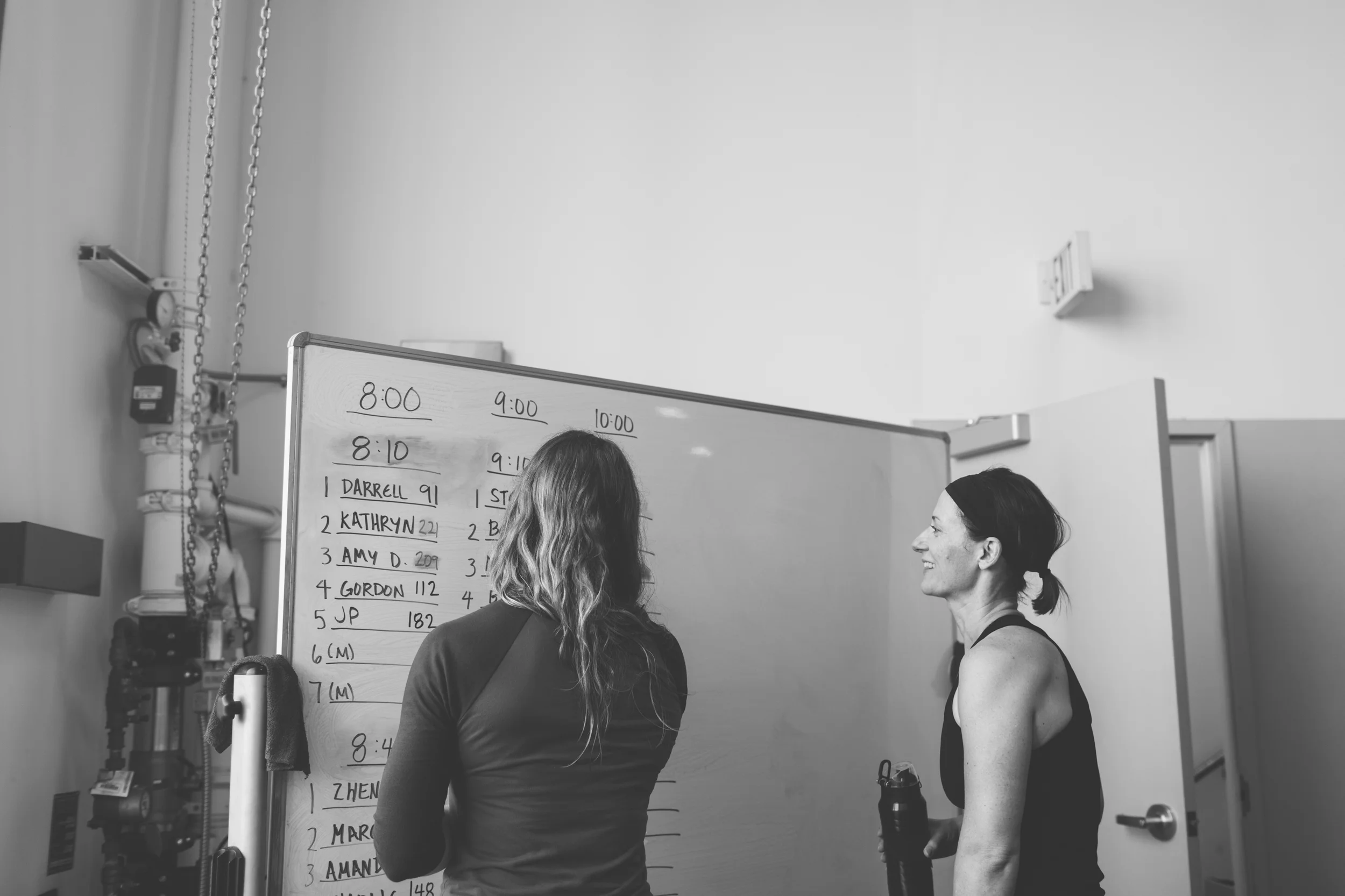
IKEA: CrossFit, Tetris, Mobility, Engineering
Saturday's classes reminded me of an old blog post I once wrote several years ago when we were still making weekly IKEA runs to buy things for setting-up the gym. While Sarah's fear of Achilles tendon ruptures courtesy of stray Costco flatbed carts is a valid one, I still think that the experience that is IKEA remains my all-time least favorite "shopping" excursion:
IKEA. Just the word makes me shudder. But it had to be done (and needs to be done again soon, sadly), and recently we got after it. In between classes and other appointments we had only approximately 90 minutes on the running clock to complete the following:
Locate, purchase, lift and carry (thank you, CrossFit):
17x Folding Chairs
1x Eight Compartment Shelf
1x Sixteen Compartment Shelf
1x Large Bathroom Storage Bench
-then-
Jam said treasures into smallish SUV without breaking anything (thank you, Tetris)
-then-
Drive back to Arena Ready with my seat nearly against the steering wheel (thank you, hip mobility)
-then-
Coach the next class while my fiancee [Editor's Note: we weren't married yet, obviously] assembles the first few pieces (thank you, my dear, for your engineering mind and useful skill set)
About 3 minutes before we took the picture below I thought to myself "FML, I'm going to have to drag this stuff back in there and return the ones that don't fit in the car. And then my head might explode on some poor girl's plate of Swedish meatballs."
But then the NES Tetris song in my head changed tunes and BOOM, like a glove.
Arena Ready - 1
IKEA - 0

The picture doesn't even do it justice
WOD for 06-13-16:
ON A RUNNING CLOCK...
A) At 0:00
Deadlift:
5-5-5-5-5
Climbing
B) At 18:00
"Diane"
For Time:
21-15-9
Deadlifts @ 255/155 lbs
Handstand Push-ups
(Compare to 02-13-15, 03-03-14, and 09-03-13)
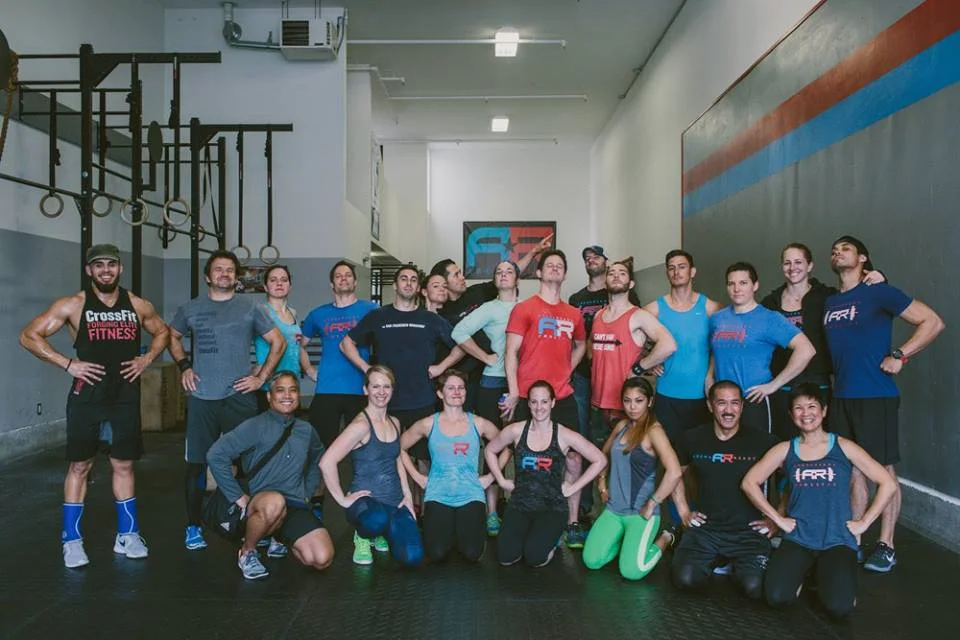
Back-to-Back
Friday's programming gave us an opportunity to utilize a WOD that was unlike any other Friday class in the last 2+ months (thanks to the highly successful back squat program and resulting GAINZ that occupied our Fridays in April and May). Athletes who came in on Friday were treated to a nasty partner met-con with our good friend, Curtis P, and many may be thinking that the traditional Sweaty Saturday Partner Programming would be on hold for a week. Well, in this case, you'd be wrong.
Giddy up, get your (sore?) booty in here, and enjoy!
WOD for 06-11-16:
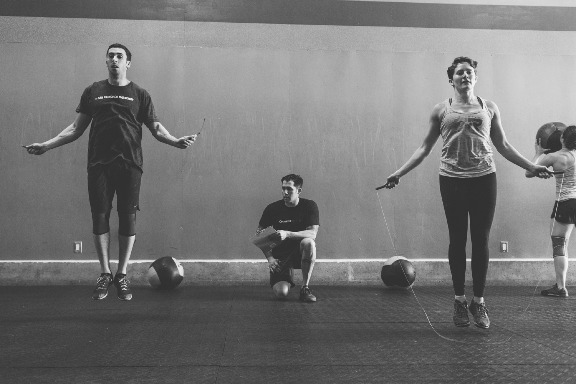
With a Partner For Time:
1600m Run
150 Wall Balls @ 20/14 lbs to 10/9 ft
30 Ground-to-Overhead @ 135/95 lbs
One person working at a time. Spit/partition the run and reps in any fashion.
Summer On-Boarding Starts This Saturday!
Summer 2016 on-boarding for newcomers starts this Saturday, June 11th!
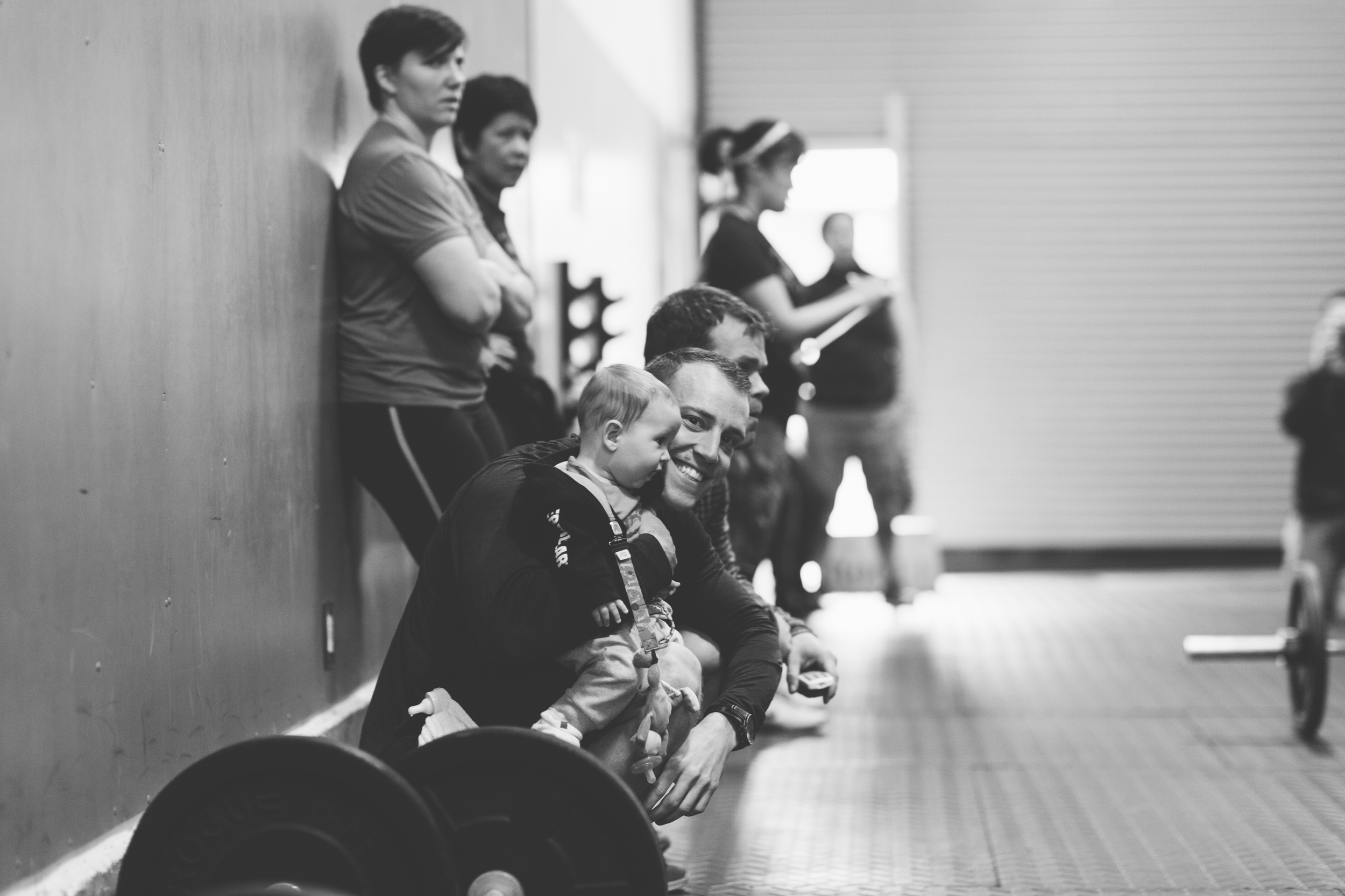
Most of you who are members at Arena Ready know that we only on-board a small number of new athletes every few months as membership spaces become available (usually because a couple of existing members moved for a job/school/etc). We're lucky to have a community of members with very little turnover, and we have dozens and dozens of folks who have been with us for 2, 3, and even going on 4 years. This creates the sort of unique and welcoming atmosphere we have at the gym... a close knit family of like-minded people from all different walks of life, who support and encourage each other in the pursuit of getting better. While we receive inquiries every day for new people to join Arena Ready, we keep the intake & on-boarding process deliberate in order to keep our membership at a constant number - putting us in that sweet spot of knowing everyone in the gym, and being able to coach each athlete in a personal manner that ultimately leads to real progress.
Our Summer on-boarding process starts this Saturday (June 11th) with the "Introduction to CrossFit" class and continues the following Saturday (June 18th) with the "Beginner's CrossFit" class. Both 90-minute classes are free, and the completion of both allows a prospective athlete to then select a membership and start taking group classes as a member at Arena Ready. Existing members who would like to sit-in on the first half of the "Introduction to CrossFit" class are also welcome to do so, as the first 45 minutes cover the methodology of CrossFit and our specific approach to the application of that methodology at Arena Ready (a great way to get a refresher on that info if it's been a while since you've given it any thought).
Why am I telling all of you this? Because I want you to help us continue to build Arena Ready with the sort of amazing people we already have in the building. I want your significant others, your family members, your friends, your neighbors, your loved ones - those are the folks we want to be a part of this incredible community, and those are the people who tend to stick around and really make fitness a lifestyle... because they already have you as a built-in advocate and support system. That's not to say we don't love the complete strangers who find their way to us and eventually become big parts of the AR family - we certainly have our fair share of those stories as well. But since so many of you ask us on a regular basis when the next on-boarding opportunity will be - because you have someone special in mind who you think might really enjoy it and benefit from the program - I figured I would post a final last-minute reminder here to let everyone know.
So send them our way and help us fill the place with the incredible people in your life. They can register for the free classes on our website here! Existing AR members who would like to sit-in on the first half of the "Introduction to CrossFit" class can simply show up and hang out - no need to register for the class online.
WOD for 06-10-16:
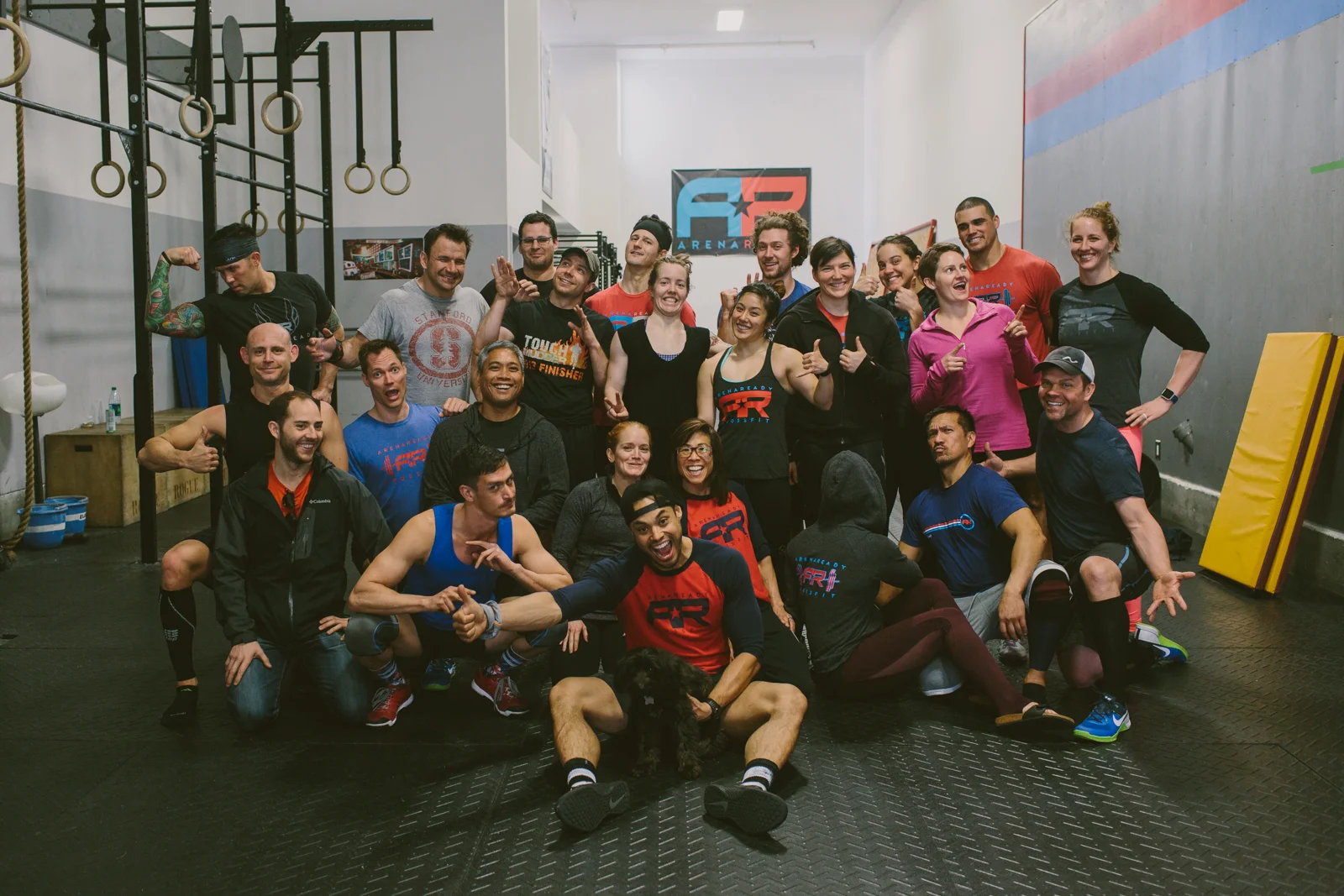
With a Partner For Time:
2000m Row, then...
50 Curtis P Complexes @ 95/65 lbs
***4 Burpees At The Top of Every Minute During Curtis Ps***
Partners may SPLIT the row and Curtis P reps in any fashion (does NOT have to be evenly). The Curtis P's cannot start until the row is completed. 4 burpees must be completed by BOTH partners at the top of every minute while accumulating the Curtis P reps, and the Curtis P's cannot re-start until both partners have completed the burpees.