
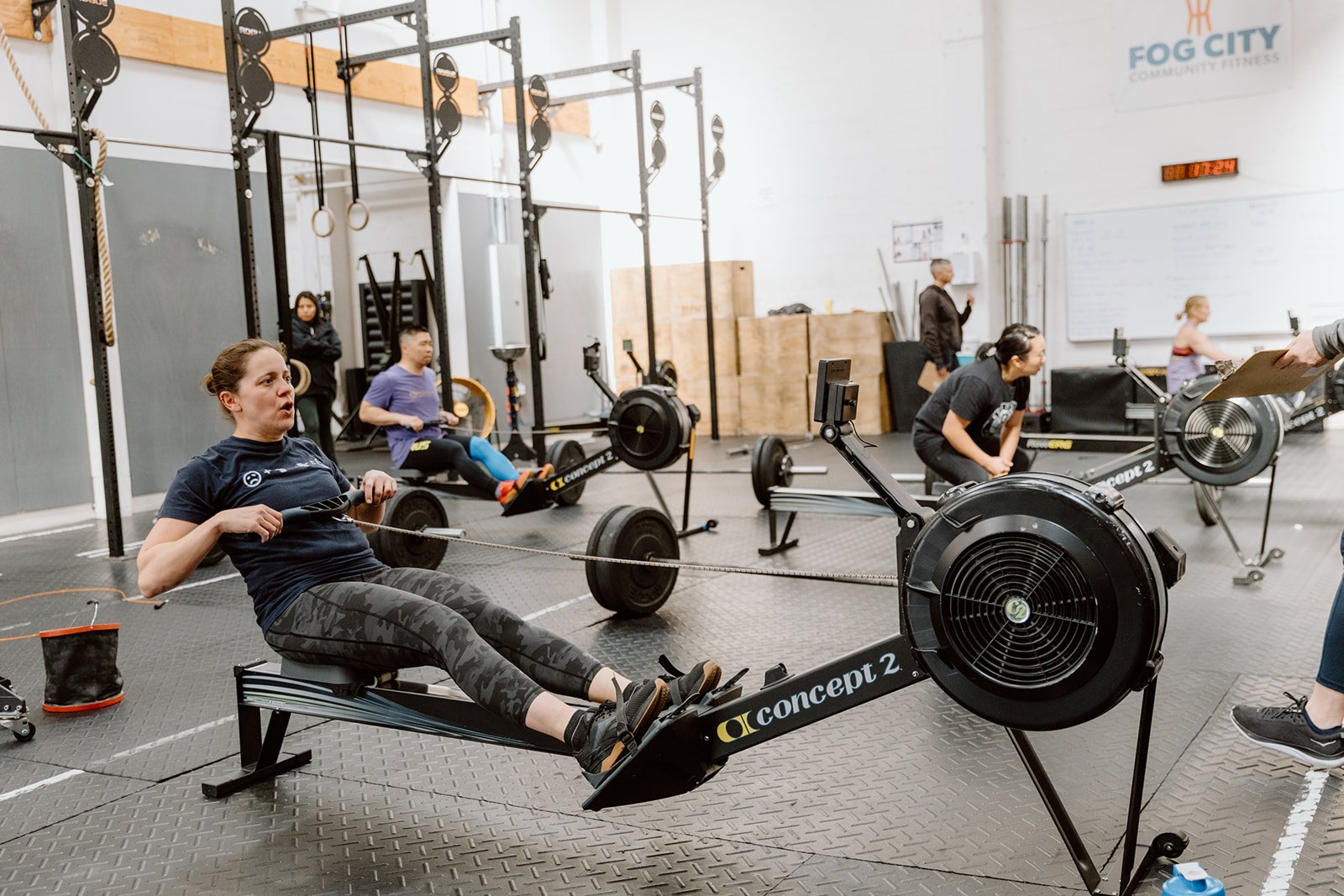
Workout of the Day
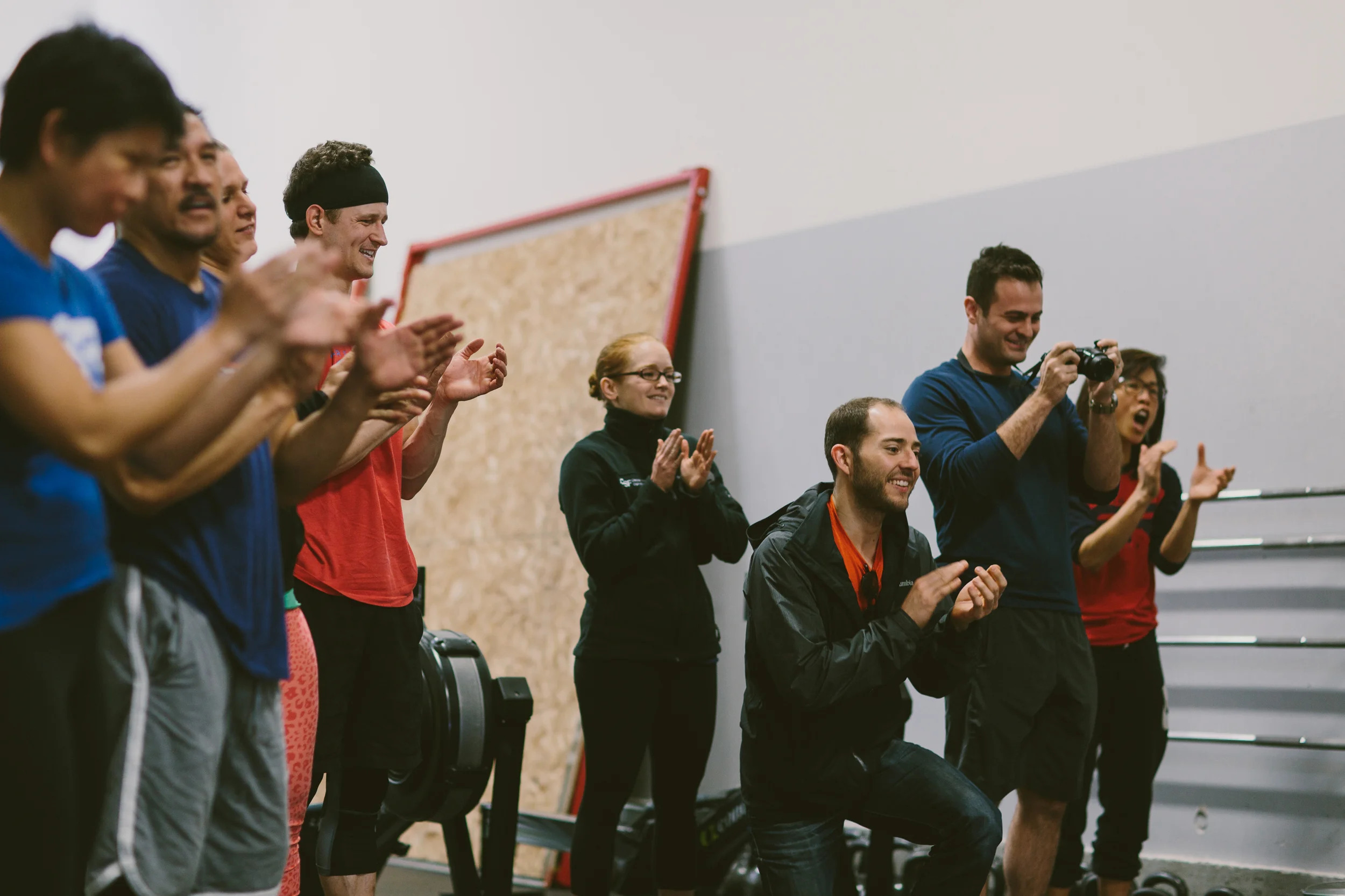
Learn From My Dumb Arse. Literally.
Here's a re-post (from July of last year) that we thought would be helpful to share once again. Enjoy!
I recently read an article on PubMed titled Prevalence of gluteus medius weakness in people with chronic low back pain compared to healthy controls. It reminded me of how stubborn I had been over the years regarding my own low back pain, and the role my glutes played in that pain.
It took me years to learn that my chronic lower back pain came from my weak glutes & hip dysfunction. I didn't understand it. I mean, I was a good athlete all my life... and one hell of a dancer up in tha' club. These hips don't lie, son (real talk).
CrossFit forced me to further my understanding of what my body was doing right and what it was doing wrong. Then, as I started to understand it better I fought the notion. "How could I have weak glutes?! I deadlift 2.5x my body weight. I can dunk a basketball (well, I could... at one point... haha). Nonsense!!!" Turns out my adductors and spinal erectors are overachievers and like to outshine my slacker booty. Hence adductor strains whenever I'm being lazy and not potentiating my glutes on the regular (i.e. I stop doing my banded glute walks/steps, various bridges, planks, and other activation exercises). Also turns out I couldn't separate hip flexion from spinal flexion, meaning I couldn't bend at my hip without bending my back (pretty common for many of us).
As athletes at Arena Ready your progress and safety is our main concern. Please learn from my own stubborn mistakes. Let my pain save you pain. Trust me when I say that the glute activation movements we do in warm-ups are important, and not just "time fillers" for you to go through the motions. They are also a minimum for most everyone - to really effect change you have to do a bit more, and be consistent with it. We just purchased a batch of new "glute bands" for the gym - please use them (they are stored next to the larger stretch bands & PR gong). Get in 5-10 minutes early and add glute activation to your pre-class foam rolling routine. If I told you 5 minutes of glute work every time you're in the gym could potentially save you a ton of back pain in the long run would you do it? Well, I'm telling you. Ask a coach if you're not sure you're doing the exercises correctly - we're happy to help, and will be thrilled to see you implementing the movements in addition to our normal class warm-up and mobility.
My low back pain is pretty much gone these days. After 15 years of competitive sports with chronic back pain my dumb ass finally started to figure it out (pun intended). The last 4 years have been spent trying to understand WTF I've been doing incorrectly and then actively correcting it.
Join me. Don't accept chronic back pain as your fate. Determine your fate. Say NO to back pain!
WOD for 04-15-16:
Back Squat:
6x3 @ 80%
Across
(Use the same 80% loading from your 6x2 on Tuesday 04-12-16)
-then-
Hang Squat Snatch + Overhead Squat:
5 Sets of (1+1)
Climbing

Tradeoffs and Optimizing Health
Elite athletes think of the world in terms of tradeoffs - every decision boils down to how and whether each choice will affect their performance at practice today, or the competition next month. Fun activities like snowboarding or waterskiing often present an unacceptably high risk of injury, to the point that doing those things is off limits even in the written terms of a coach-athlete agreement. Colleges are chosen based on scholarships, as is the decision to even go to college. Degrees are evaluated based on how time intensive they are and whether they will affect practice, careers are delayed to pursue Olympic or professional sports goals. Family events are missed with regularity, relationships can be fractured. An elite athlete's entire life has to revolve around sports performance, if he or she wants to reach the highest level.
Personally, I made many of these choices and most of these sacrifices. I missed my brother's high school commencement address to set and hold the Pac-10 record for a few minutes. My college GPA suffered - I was the co-valedictorian of my high school, only to score a 2 something in my first quarter of college because I was spending almost all of my time and energy at practice. Since college, I've pursued a meaningful career in financial services, and also opened my own CrossFit gym with my husband, trying to make an impact in the world and provide for our future. During this time, I fell short of making the Olympic team in 2008 essentially because of a technicality, and missed qualifying for the CrossFit Games by a point equating to a single second in one event, and a single rep in another. For a long time, I thought I just didn't try hard enough, but I've learned that in reality I was trying to achieve too many things at the same time. Therein lies the truth - I didn't want success enough to make the necessary sacrifices, or I didn't understand the effect of my choices.
In today's world, so many people believe those who sell products or services claiming that success is on the other side of some magic pill or fad diet. This culture leads us to believe we're the only ones not experiencing the easy path. The truth is, day in and day out, successful people choose painful tradeoffs and necessary sacrifices, knowing that the pursuit of anything other than their goals will delay or even defeat the objective. They're as consistent as they can humanly be in their pursuits, not to say they're always perfect, but they strive to make the best choices they can day after day. Success requires assessing these tradeoffs, and truly understanding what it means to choose - family, career, a second career, fitness, nutrition, health, money. Complete focus in one area necessitates complete neglect of something else. Consciously compromising to choose balance is the right choice for many people.
I regularly talk with people about how their lives impact their health choices - obligations to family or work prevent them from exercising, choosing nutritious food, or getting enough sleep. I also talk with people who feel guilty for underperforming in sports when they're choosing to succeed as parents or as entrepreneurs. Because time and energy are finite resources, these tradeoffs are real, but they don't have to be dissatisfying. If you are conscious about how your priorities and goals relate to each other, you can choose an acceptable level of sacrifice in one area in order to enjoy success in another. Doing this consciously puts you in the driver's seat, and gives you control of your life.
WOD for 04-14-16:
Alternating EMOM for 5 Rounds (10 Minutes):
ODDS: 5-7 Toes-through-Rings
EVENS: 30-45 sec Handstand Hold
-then-
For Time:
8 Muscle-ups
80 Double Unders`
40 Kettlebell Swings @ 53/35 lbs
6 Muscle-ups
60 Double Unders`
30 Kettlebell Swings @ 53/35 lbs
4 Muscle-ups
40 Double Unders`
20 Kettlebell Swings @ 53/35 lbs
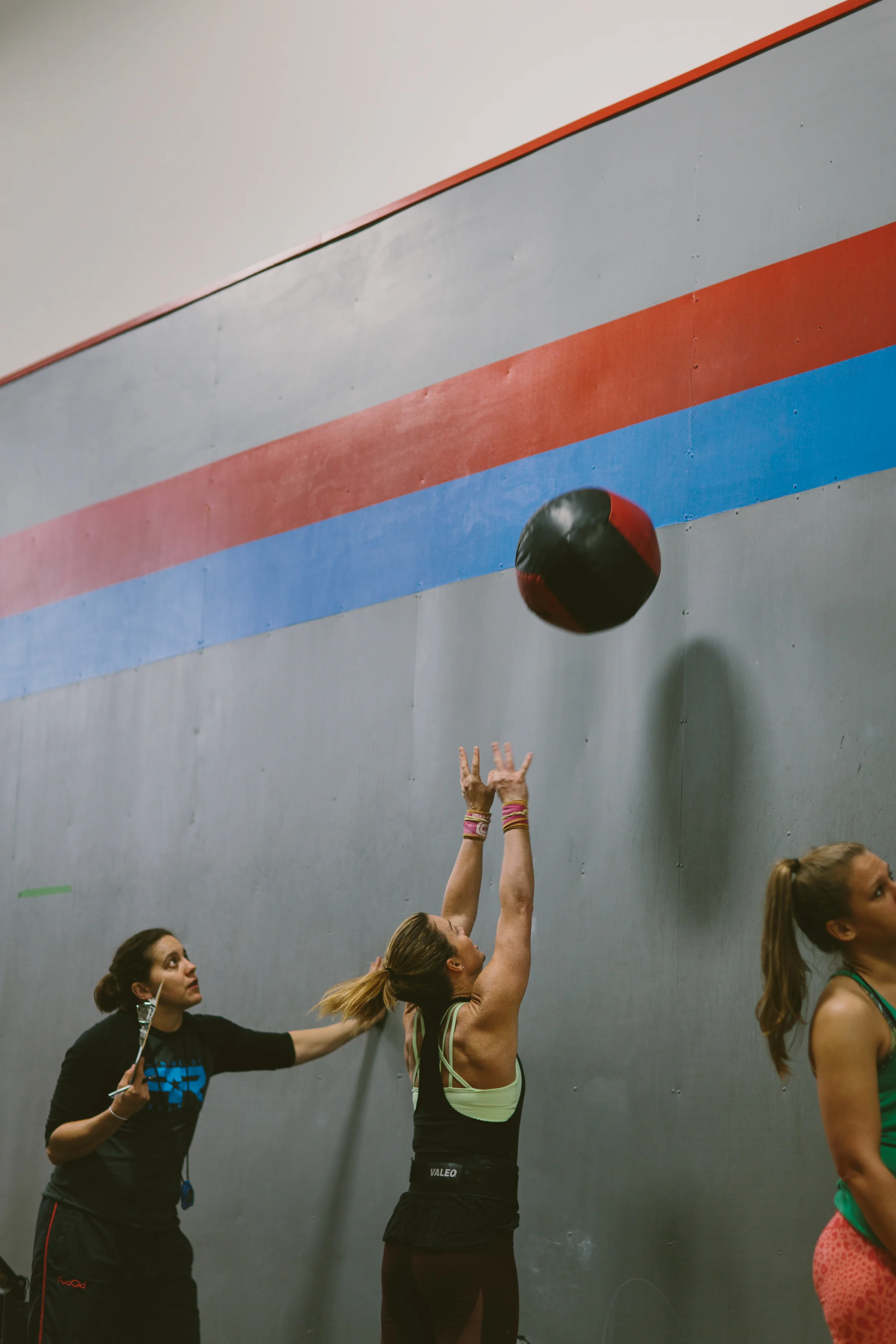
73
73. That's the number.
I've been a Golden State Warriors fan my entire life. I grew up playing basketball here in the city and although I eventually became a collegiate tennis player it was basketball that was my first love. And when I say I was a Dubs fan my entire life I mean it... as a youth I scrounged to buy tickets when they were terrible, I stayed in the arena during 20+ point losses cheering for Manute Bol three-pointers so that we could get free Taco Bell with our ticket stubs, I had the Pizza Hut calendars with Run TMC, Alton Lister, and Sarunas Marciulionis on them, I booed when they drafted Todd Fuller, Joe Smith, and Adonal Foyle, wondering if we were trying to field a book reading squad instead of a sports team. I used to say things like "Sprewell is the best guard in the league not named Jordan" and "C-Webb just gets a bad rap." A bunch of nonsense statements really, indicative of dumb things a true fan says from time to time. Hell, I even thought that maybe, just maybe, that 8th seeded team in '06-'07 could actually go all the way after beating the 1st seeded Mavs - I lived two blocks away from Baron Davis at the time and thought perhaps it was a sign from the basketball gods. Silly me.
So nowadays, with all the recent success the team has had, I try not to talk it up too much and be one of those obnoxious bandwagon fans, pretending like they were here all along. You know who I'm talking about:
So you'll have to excuse this one (for now) post about the Warriors and their quest for history - 73 wins in one season. I realize that even if they make it to 73-9 all the Bulls fans and other haters will say that Jordan and Co. would have swept my Dubs 4-0 if they played with both teams at their peak. Obviously I don't agree.
Go DUBS. AR folks, you know which socks I'll be wearing on Wednesday.
WOD for 04-13-16:
"Run TMC"
6 Rounds, Start Every 4 Minutes:
20/17 Calorie Row
200m Run
6 Unbroken Hang Power Cleans @ 155/105 lbs
3 Unbroken Front Squats
6 Lateral Bar Burpees
If the barbell movements are not completed unbroken (i.e. performed as one set of nine total reps) the athlete must add 3 lateral bar burpees for every time the bar is dropped.

It's the Vernal Equinox, Bro
The beauty of a structured squat program is that - for just about everyone - it works. Assuming you consistently make all of the training days, use reasonable and correct loading (i.e. don't start calculating based off of a "fantasy" max that you technically have NEVER made but think you could in ideal conditions when the weather is just right, you've eaten your ideal breakfast at the optimal time, and you're using your lucky bar and rack that you wish everyone else would stop using because WTF don't they know it's yours), take your recovery seriously, and trust in the program. Unless, of course, it's the vernal equinox - in which case there's no way you can do legs today, Bro:
(Some language NSFW)
Sadly the vernal equinox has already passed this year, so you're outta' luck with that excuse.
In all seriousness, if you want to reap the most benefit these next couple of months then trust the program, be consistent in making the training days, recover like an athlete, and hopefully 8 weeks from now you'll be enjoying the rewards.
Here's some Day 1 motivation for you. Fist, the Squirrel with a PR of 235 lbs (at 108 lbs bodyweight) following our last squat program:
And Coach Sarah with a PR of 353 lbs (at 165 lbs bodyweight) the last time she did a very similar program we're about to start on Tuesday:
I need some new PR videos at the end of these 8 weeks so I can stop posting these two. Who's it gonna be?
WOD for 04-12-16:
Back Squat:
6x2 @ 80%
Across
(Calculate using your top set from 11-24-15, 02-23-16, 03-09-16, or a more recent 1RM if you have one)
-then-
AMRAP 8 Minutes:
10 Shoulder-to-Overhead @ 115/80 lbs
10 Chest-to-Bar Pull-ups
20 Air Squats

SKWATS: The Next 8 Weeks
The 2016 Open is now in our rearview mirror and accordingly - as we do several times throughout the year - we start to guide the "constantly varied functional movements performed at high intensity" ship in a slightly different, targeted direction. Those of you who really geek-out on programming, and/or who have been with us for a several years, may have a sense of the phases and cycles that weave their way into and out of the general programming throughout the year. Some pieces are very obvious, others not so much, and some we (believe it or not) intentionally "hide" in the fabric of the workouts and weekly/monthly programming in an effort to make the overall program as simple & elegant as possible while also allowing for vicious/evil/wicked intensity. This presents the opportunity for "flat out go hard" as often as possible for the individual athlete, assuming that consistent training, sound mechanics, and intelligent scaling are all in play. The goal of all of this is simple - increased fitness ("work capacity across broad times and modal domains") and a elevated state of general physical preparedness (GPP).
One of the components over the next couple of months will be an 8-week squat program. The program will have us squatting (from the rack) twice per week, Tuesdays and Fridays. In the past we have rotated squat days on different days of the week during our squat programs, mostly to keep the complimentary movements & workouts fresh and to allow for an element of variance surrounding the structured cycle. This time around we have chosen to set the days on Tuesday & Friday for several reasons: 1) it allows for a "flex" day on Sunday Open Gym if you are unable to make one of the sessions during the week; 2) it works quite well for our competitive Olympic-style weightlifters who train 3x per week (in addition to CF class) at Barbell Club; and 3) it gives all athletes, who truly want to complete the program from beginning to end, advanced notice of training days and exactly what to expect in order to complete the cycle.
More info to come here and in class. If you're the type of person who likes to get into the nitty gritty of it all feel free to contact us or chat us up at the gym. If you couldn't care less about the method behind all the madness and/or are perfectly content just showing up, trying hard, and trusting the program then just keep doing what you do. Either way get your butt in here and have fun getting even stronger, fitter, and faster over these next couple of months!
WOD for 04-11-16:
Deadlift:
2-2-2-2-2
Climbing (add to your top set from 03-28-16 if possible)
Superset:
7-10 Hollow Rocks
-then-
"Running Christine"
3 Rounds for Time:
400m Run
12 Deadlifts @ Bodyweight
21 Box Jumps @ 24/20 in
(Compare to 04-30-15 and 09-29-14)

Good Food Bad Food - In Practice
As a follow-up to Coach Sarah's "Good Food Bad Food - In Theory" post a couple of days ago, here is her latest entry titled "Good Food Bad Food - In Practice" which hopefully provides some useful information on how to apply the assessment tools she described in her prior entry. Enjoy!
Good Food Bad Food - In Practice
In my last post, I described some theoretical tools I've found useful in assessing whether I want to eat something, especially when I'm focusing on making optimal food choices. I also promised to explain the place hamburgers, milkshakes and french fries have in my life.
Without further ado... hamburgers!
First off, I think hamburgers might be the most unfairly maligned food on earth. A hamburger "done right" has got to be one of the best foods on the planet, and given how frequently some version of burger is available at restaurants, it is quite frequently the most predictable, most measurable item on the menu. That said, my optimal hamburger order is probably not what some envision when thinking about this food.
In terms of food quality, not all hamburger meat is equal. Fast food restaurants hit the news for infusing their burgers with pink slime in recent memory, and some restaurants put all sorts of stuff in their burgers besides meat. For this reason, my first question about my burger (generally to myself prior to setting foot in the restaurant, not my server) is how close the cow was to its natural state - I consider the source of the meat. Thankfully in San Francisco many restaurants are proud of their commitment to local, sustainable farming, so I can often determine whether my meat is likely to be responsibly raised and grass fed. I generally do my best (without offending my friends or family) to choose restaurants that I believe use the best quality food available, and am willing, within reason, to pay a premium knowing the meats and vegetables are organic, local, sustainable, and as close to their natural state as possible. I also try to determine whether the burger contains just meat, or other things (chemical-infused spices, or for me bread crumbs, worst of all) that would be against my preferences. If I decide the meat is up to my standard, that's great and I'll be back!
Next, I question whether the burger has anything in it or on it that I know will cause me grief if I eat it. Namely, I know that eating cheese on my burger is closely correlated with a subsequent breakout (quite pesky), and that if I eat the bun I will feel like I might die due to "knives" in my gut, or subsequent sleepiness and crushing anxiety. I've learned these two sensitivities through trial and error, and each time I start to think maybe it's all in my head (as some on the internet would have you believe) and eat bread in particular, I'm reminded quite strongly that it's not my imagination. In practice, for me, this means that I never eat a burger with the bun (unless it's gluten free, and even then usually not). I always get a lettuce wrap, or just hold the bun altogether and eat it with a fork (and knife if I'm being civilized), because the consequences of gluten poisoning are never worth eating the bun - it's just never delicious enough to warrant the trade-off. Cheese, on the other hand, is sometimes worth it. I basically ask myself whether I want cheese badly enough to wear its effects around on my face for a few days. Sometimes, it's totally worth it (sorry Rob!)
Side note: I don't know if this is scientifically supported, but if a restaurant uses styrofoam or plastic for my "to-go" burger without a bun I will not be back. A hot burger soaking through its lettuce wrap and melting the plastic or styrofoam (thanks SF for banning that stuff!) container makes me feel like I might be getting cancer on the spot. This could be all in my head, but since this is a post about my thought process, I figured I'd get that one out there also.
Finally, I assess whether the burger is consistent with my goals (and macros). This is where burger toppers come in, and one of the main places burgers can become "bad". I know, generally speaking, how much meat I'm getting with the burger. I know that I'll be getting about 2/3 protein and 1/3 fat in terms of calories when I eat it, and no carbs. An egg is about half protein and half fat, as is bacon, and avocado is 100% fat, but healthy fat of a variety I consider fair game especially when I'm not cutting weight aggressively. Grilled onions or mushrooms often have a lot of fat in them, so they're not my first choice because I don't know what kind of fat (healthy or unhealthy) and they don't add enough for me in terms of flavor to warrant the use of my fat grams/calories. In the event I'm having a cheese day, cheese is mostly fat with a little bit of protein. From a caloric perspective, ketchup is a small dose of sugar, mustard is nearly negligible, and mayo/special sauce is a waste of calories (fat). I decide whether to add any of these toppers based on what sounds good, and how big of a meal I need. Most days, the burger by itself is plenty of food for a single meal, but if I'm behind on food for the day (hangry) or know I won't be eating for awhile I'll add some toppings.
Once I've thoroughly assessed my burger and its toppings (a process that takes about 13 seconds now that I'm used to the process), I decide whether I'd like to add a shake or fries. This process is much like the above in terms of food quality - if it's a restaurant with responsible meat sources, their milk and potatoes will probably also be up to par. The oil the fries is cooked in is an additional consideration - my favorite place uses tallow from their grass fed burgers (awesome!), but some places use processed seed oils, or contaminate their oil with gluten from chicken nuggets, etc., so this can be a reason to say no to fries.
In terms of food sensitivity, as I stated above, I'm accepting a breakout if I choose the milkshake, but some of the time that's worth it. There is some discussion in the Paleo community of white potatoes being a sub-optimal choice because of antinutrient content that increases gut permeability and contributes to systemic inflammation if I understand the argument against them correctly, so I try not to let white potatoes become a staple of my diet. I do eat them, but in moderation (and skinned when possible). If sweet potato fries are an option, I usually go for them because they have less arguments against them.
Finally, milkshakes and fries occasionally fit my macros. If I'm having a hungry day due to low caloric intake to the point of the meal, or I've been working out really hard, I may have "room" for at least some of either in terms of overall calories. My burger already has my protein and fat needs met for the meal, so I'm primarily trying to add carbs at this point. In terms of calories, milkshakes are a somewhat even split between carbs, protein and fat, and french fries are somewhat evenly split between carbs and fat. Neither would be my first choice of carbs, but especially when I'm not in a cutting phase I can choose to eat a lower fat meal later in the day to make up for being a little high on fat at this particular meal. If I choose against the fries and shake, I know I need to go find carbs elsewhere later. People who can eat the bun, made almost entirely of carbs, wouldn't have this issue. At this point I could get much farther in the weeds with regards to macro "Tetris" but this is probably sufficient to make the point. The last part of this component is to decide if I want my own, or if I'm willing to share!
This concludes my Good Food Bad Food thoughts for now. If you have further questions, please don't hesitate to ask in the comments, or contact me!
WOD for 04-09-16:
"Karabel"
6 Rounds for Time:
5 Power Snatches @ 135/95 lbs
25 Wall Balls @ 20/14 lbs to 10/9 ft
(Compare to 08-08-16)
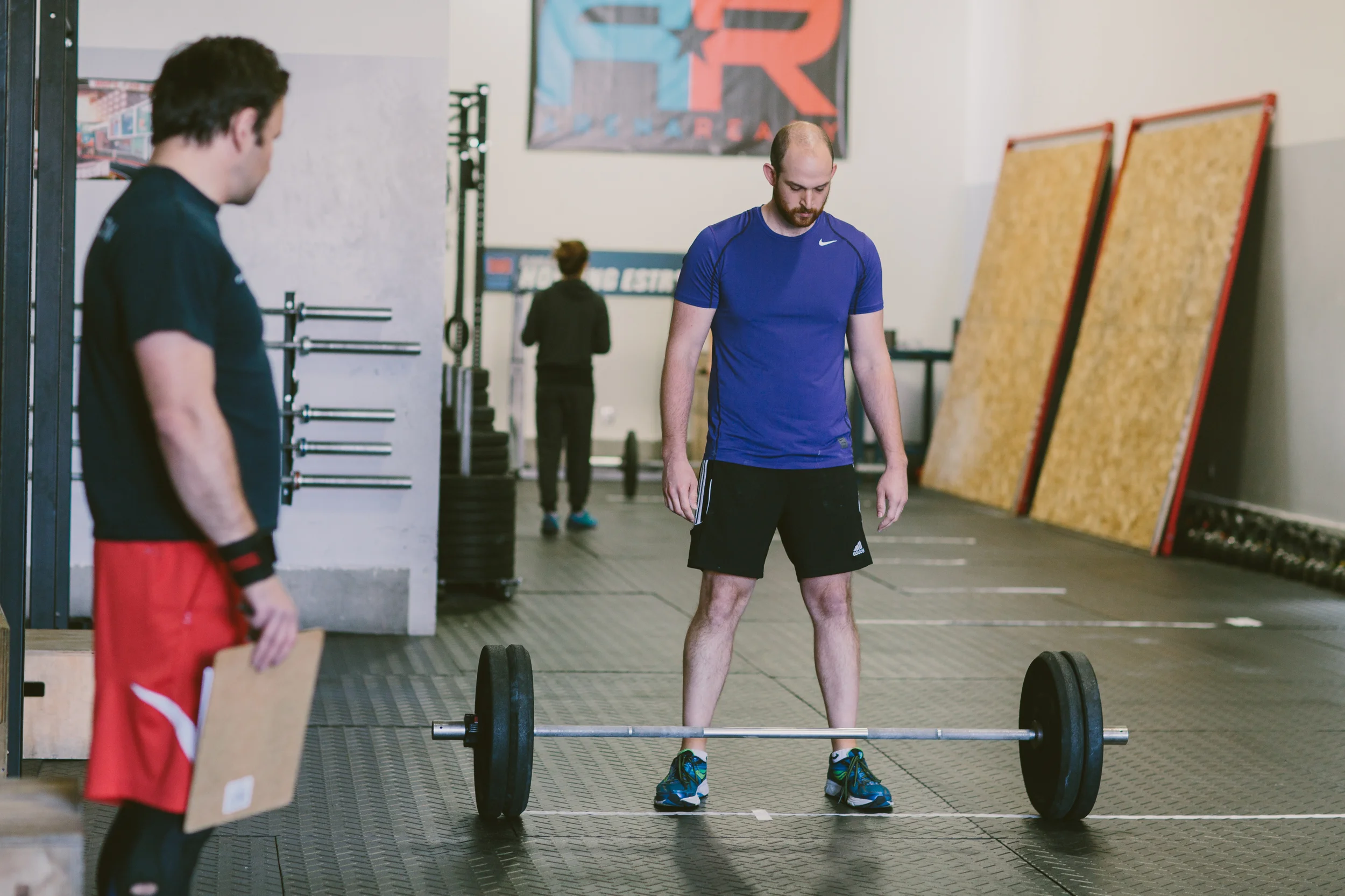
How You Do One Thing is How You Do Everything: The Push-up
Friday's ring push-ups are, among other things, intended to help some of you who are still working toward finding the correct body position (i.e. tight, straight plank) in the standard push-up. The movement is a great teaching tool for this purpose, and allows athletes of all levels to scale to their individual ability based on the body angle during the movement.
This talk of (standard) push-ups reminded me of an old post I wrote several years ago - so here's a Flashback Friday post to end your week. Enjoy my grumpy ranting!

In a former life I interviewed hundreds of eager candidates who sought to join a sales and client service team within a demanding, deadline-driven, constantly evolving services and technology industry. Over the years I had culled my interview questions down to just a handful that seemed to work really well for predicting how that candidate might fit into the role we were trying to fill. One universal concept we tried to stress in this process was "how you do one thing is how you do everything."
Think about it. You all have friends, family, and coworkers and some of them might be good examples. That buddy you have who has an organized car that's always sparkly clean? They probably have their act together at work and stay on top of their list of action items with a sense of urgency. Your cousin who has months-old unopened mail and catalogues on her dashboard, and a half eaten pizza on the backseat? I'll bet her email inbox at work has thousands of messages in it, and she "can't figure out why her email thingy keeps crashing" when you need her to follow up with a client.
In the gym, and with human movement, it's the same thing. How an athlete does one (basic, fundamental) thing usually indicates how they'll do nearly everything else. The guy with the sloppy air squat, who doesn't work to correct it no mater how many times he's cued to do so? He likely moves poorly in just about everything else we do in the gym. One movement we generally get a lot of comments from both newbies and experienced alike is the push-up. We teach the push-up in on-boarding and we cue the movement frequently in the gym's WODs, sometimes to the point of bewilderment by a few. But the truth remains-- how an athlete does this one thing is generally how that athlete will do nearly everything else. Those that have chosen not to correct their push-up positioning or go through the period of "but it feels way harder when I do it that (correct) way!" have generally not progressed in push-up strength, stability, or muscular endurance (I'm looking at you, gentlemen... you know who you are). Those who have? Well, they're smoking folks in push-up WODs and are now the people I point to when I'm trying to get someone into the correct position.
Greg Everett wrote a great article many years ago about the push-up, and I was reminded of it recently when observing some new athletes do push-ups in our free Intro Class. His article is located here, and I've pasted an excerpt below:
The push-up is one of those things that when done well doesn’t draw much attention—it’s not a flashy feat of athleticism. However, in my opinion, how one performs a push-up is indicative of that individual’s athletic foundation, and possibly more importantly, how committed one is to excellence in movement and performance. Sloppy push-ups suggest to me a superficial interest in athleticism and a degree of laziness. Put a little attention and effort into the simple things and it will pay returns in the more complicated and interesting ones.
How you do one thing is how you do everything.
WOD for 04-08-16:
Alternating EMOM for 6 Rounds (12 Minutes):
ODDS: 7-10 Ring Push-ups
EVENS: 30 Unbroken Double Unders
-then-
AMRAP 10 Minutes:
30 Walking Lunges
20 One-Arm Russian Kettlebell Swings @ 53/35 lbs (10 per side)
10 Burpee Box Jumps @ 24/20 in

Good Food Bad Food - In Theory
I read this great blog post today which was written by a nutrition coach who has helped me (and many others) quite a bit over the years with my diet, performance, and aesthetics goals. The post is pasted below in its entirety for your reading pleasure. You can check out her practice here, and read some of her other posts which might be helpful for anyone looking to optimize his/her nutrition in an effort to achieve their specific goals. You might recognize her. ;-)
Good Food Bad Food - In Theory
I wish I could decouple the association of "good" and "bad" with foods.
I received this text from a client this morning. So many of us grew up with this association, and it's a really hard habit to break, especially because "good" and "bad" foods are so often based on misguided or outdated assumptions that may not fit with our own views of what makes a food healthy or nutritious.
If we think of foods in terms of their underlying qualities, I think we can get somewhere useful in terms of breaking down these good/bad associations, and turn them into more useful assessments of whether to eat something. How close is the food to its natural, unprocessed state? Was the animal I'm eating healthy before I started eating it? Does this food give me adverse reactions like acne or a stomachache? Does this food "fit my macros" or more broadly, "my goals"?
To be clear, food choices are very personal, and I realize some of the conclusions below may not be "fact" in some circles. That said, my own beliefs summarize a great deal of experimentation and research into the ever-evolving knowledge base surrounding food and nutrition, so I clearly believe them to be valid. If, by chance, something you read below doesn't resonate with you, I hope you'll reach out to me for some spirited debate (hopefully we'll both learn something!)
My methodology is strongly influenced by the great minds in the Paleo community, and I've become quite convinced that the research behind the recommendations to eat the highest quality food you can afford is sound. Eating food that exposes us, either as it's growing or as additives in the final product, to chemicals, GMOs, altered fatty acid profiles, and other foreign influences relative to our more traditional food sources even a few hundred years ago, likely is a contributing factor to the maladies we as a society face today. The more a food is processed, and the less natural the state in which it was raised (either plant or animal), the less likely it is to be a rich source of nutrients, and the more likely it is to be a rich source of toxins or antinutrients.
Assessing the possibility of food sensitivities, allergies and underlying autoimmunity is a popular concept on the internet these days, and not without basis. For those sensitive to specific categories of foods: dairy, grains/gluten, legumes, nightshades, etc. these concerns are very real, and can be exceptionally disruptive to daily life and optimal function. For these people (myself among them), choosing to eat foods which exacerbate your problems is a "bad" choice. Not to say you can't make it, but in doing so, you are choosing to make yourself sick (still can be worth it occasionally).
Note: If you suspect you may have a food intolerance, and especially if you think you may have an underlying medical condition, I highly recommend seeking the advice of a professional who is interested in helping you assess the possibility in a responsible, medically sound way. Once a food sensitivity or underlying medical condition is diagnosed (or ruled out), it's much easier and quicker to adjust your diet and lifestyle accordingly, rather than using blind self-experimentation to try to figure it out. Some tests (like that for Celiac) are much less reliable once a particular food has been eliminated, so it's best to seek the advice of a doctor early on.
Finally, energy balance (aka calories eaten relative to calories burned) is widely agreed to be a significant variable in the body composition equation. The tools for measuring calories eaten and calories burned are not as developed as most of us would like, and the body's mechanisms for adjusting metabolism to account for changes in energy balance are quite complex, but the underlying concept is useful. Generally speaking, if you eat more than your body needs you gain weight, and if you eat less you lose weight. A huge breakthrough in my understanding of good and bad food came years ago when I realized that there is actually a minimum intake required to support your body's basic functions like digestion, staying awake, rebuilding tissues, and breathing. If you eat less than the amount required to support these basic functions, you won't lose weight as much as you'd think because your body down regulates your metabolism, essentially to save your life. In this sense, calories are wonderful and necessary! So many "bad" foods are considered bad simply because they are dense in calories (like the way I used to feel about avocado, if you can believe it), so it's important to factor this concept into your food assessments as well. Generally speaking, how much do you need to eat per day in calories (the government recommends 2000-2500 for most people, and that's actually a pretty good estimate unless you're very small, large, active, or sedentary), and will you be satisfied throughout the day if you choose to eat this food as x% of your total intake? If yes, go for it! If no, share it with a friend, or choose something else. (If you're being more specific, the same goes for macronutrient breakdown - how much protein, carbs and fat do you need, and how much protein, carbs and fat does the particular food have).
In summary, developing an understanding of why you think a food is "good" or "bad" can be an extremely powerful tool in breaking these associations. Some foods are more nutritious than others, some are more delicious than others. Some actually make us sick, while others make us happy. For most of us, it isn't even necessary to avoid "bad" foods (ones that actually are "bad" by the above criteria) all the time, we just need to avoid making them a habit to they point they could have a detrimental effect on our body composition or long-term health.
At the risk of turning this into a full chapter, I'll end here for now. In a later post, I plan to describe how to put this thinking into practice for assessing foods like hamburgers, milkshakes, and french fries (all of which have their carefully thought out place in my life).
-Triumph in The Arena
WOD for 04-07-16:
EMOM 7 Minutes:
2 Strict Press
Across
-then-
"The Kitchen Aid"
6 Rounds, Go Every 3 Minutes Alternating Between Run and Row:
400m Run | Row 25/20 Calorie Row
then
12 Toes-to-Bar
Score is your slowest time for any given round.

April On-Boarding Starts This Saturday
Most of you who are members at Arena Ready know that we only on-board a small number of new athletes every few months as membership spaces become available (usually because a couple of existing members moved for a job/school/etc). We're lucky to have a community of members with very little turnover, and we have dozens and dozens of folks who have been with us for 2, 3, and even going on 4 years. This creates the sort of unique and welcoming atmosphere we have at the gym... a close knit family of like-minded people from all different walks of life, who support and encourage each other in the pursuit of getting better. While we receive inquiries every day for new people to join Arena Ready, we keep the intake & on-boarding process deliberate in order to keep our membership at a constant number - putting us in that sweet spot of knowing everyone in the gym, and being able to coach each athlete in a personal manner that ultimately leads to real progress.
Our April on-boarding process starts this Saturday (April 9th) with the "Introduction to CrossFit" class and continues the following Saturday (April 16th) with the "Beginner's CrossFit" class. Both 90-minute classes are free, and the completion of both allows a prospective athlete to then select a membership and start taking group classes as a member at Arena Ready. Existing members who would like to sit-in on the first half of the "Introduction to CrossFit" class are also welcome to do so, as the first 45 minutes cover the methodology of CrossFit and our specific approach to the application of that methodology at Arena Ready (a great way to get a refresher on that info if it's been a while since you've given it any thought).
Why am I telling all of you this? Because I want you to help us continue to build Arena Ready with the sort of amazing people we already have in the building. I want your significant others, your family members, your friends, your neighbors, your loved ones - those are the folks we want to be a part of this incredible community, and those are the people who tend to stick around and really make fitness a lifestyle... because they already have you as a built-in advocate and support system. That's not to say we don't love the complete strangers who find their way to us and eventually become big parts of the AR family - we certainly have our fair share of those stories as well. But since so many of you ask us on a regular basis when the next on-boarding opportunity will be - because you have someone special in mind who you think might really enjoy it and benefit from the program - I figured I would post here to let everyone know.
So send them our way and help us fill the place with the incredible people in your life. They can register for the free classes on our website here! Existing AR members who would like to sit-in on the first half of the "Introduction to CrossFit" class can simply show up and hang out - no need to register for the class online.

WOD for 04-06-16:
ON A RUNNING CLOCK...
A) At 0:00
1000m Run at an "Easy" Pace
B) From 5:00 - 22:00
Overhead Squat:
7-7-3-2-2
C) From 22:00 - 39:00
Back Squat 7-7-3-2-2
The run should be at an "easy" pace just a bit faster than a conversational jog. Warm-up sets may be taken for both the OHS and BS prior to the first set of 7, but once the work sets have started there should be no "in-between" sets during the 7-7-3-2-2 rep scheme (i.e. the athlete must go from their second set of 7 directly to their set of 3, etc).

What Happens When We Don't Scale
The good folks at Practice CrossFit in Ohio once posted a blog article regarding scaling workouts - it's appropriately titled "What Happens When We Don't Scale." It's a great reminder for all athletes, even those of us at Arena Ready who are generally smart about scaling and maintaining the intended stimulus of each day's WOD.
Here is the blog post in its entirety:
I said ten-minutes and I meant it.
Most needed only eight.
“Ten-seconds,” I warned the only athlete in a class of a dozen still moving.
“Time.”
He spiked the bar, kicked the bumpers like they were flats and clawed at his belt. The rest of his class, a team victorious and eager to celebrate a hometown win, high-fived each other and avoided the pouting child of a man as if he had leprosy.
“I trusted you to pick the right weight, not necessarily the weight on the board,” I said. “Fail me again and I’ll load your barbell for you every time.”
Annoyed at himself and wanting to punch my audacity in the teeth, he said,”I know … I didn’t think I could do it, but I wanted that RX.”
We’ve all been there, tempted by two little letters, desperately hoping to improve. But performing the workout as “RX” isn’t always the way to get better. And when it’s all said and done, better is exactly what we want. Because my friend refused to scale his jerks–a movement he struggles with–he turned a Metcon into a Skill: exactly what I said not to do.
We may surprise ourselves when we don’t scale tomorrow’s training. Records may be broken and we may do things we’ve never done. But most of the time, like my irritated friend who let his desire overcome common sense, we miss the point entirely.
When we don’t scale, we turn fragile knees into smoldering coals.
When we don’t scale, we take 20-minutes to do a 10-minute workout.
When we don’t scale, tomorrow becomes a rest day when we should be training.
Fitness can be a fortress built on good decisions, or a shack plagued by shortcuts. You decide.
-Josh Bunch, Practice CrossFit

WOD for 04-05-16:
Alternating EMOM for 6 Rounds (12 Minutes):
ODDS: 3 Hang Power Cleans, Climbing
EVENS: 6-10 Pistols, Alternating
-then-
Against a 7-Minute Clock for Max Reps:
40 Calorie Row
40 Box Jump Overs @ 24/20 in
Max Reps Hang Power Cleans @ 185/125 lbs

2016 Open Award Winners
Thanks so much to everyone who came out on Saturday evening to celebrate during our annual "Post Open" Get Together! We had over 60 folks come by to say hello, hang out, eat/drink, and socialize with friends outside of the gym, and a fun evening was had by all. For those who were not able to make it you were certainly missed - we'd like to list the "awards" we handed out during the evening to fill you all in, and to give the winners another shout out on this forum:
Top 3 Open Finishers - Men (by placement in the NorCal Region):
1) Cody R.
2) Walker T.
3) Tony M.
Top 3 Open Finishers - Women (by placement in the NorCal Region):
1) Kate "The Flying Squirrel"
2) Hillary H.
3) Lindsay "Sparkle"
"Rookie of The Year" - Male:
Gordon "G-Dub"
(Honorable Mention: Jason Y.)
"Rookie of The Year" - Female:
Yami R.
(Honorable Mention: Amy D., Mayra D.)
"Spirit of The Open" - Male:
Zach "The Natural"
"Spirit of The Open" - Female:
Sarah D.
"Inspirational Performance of The Year":
Kim T.
(And congratulations, Kim, on your second consecutive advancement to the Master's Qualifier... which we'll be covering in a separate blog post soon!)

Great work to all of our award winners, and to each athlete who participated in the Open this year! For yet another year well over half of our gym's community engaged in this event, the world's largest fitness competition, and we couldn't be more proud of the effort of our members, and the support we all showed each other as a collective group.
We also want to say a HUGE THANK YOU to Chad for being AR's 2016 Open Super Judge - he was there for every Open Saturday for five weeks, from the opening of the gym until the final heat was scored. He helped run logistics, coordinated equipment set-up, and kept things running smoothly, and without his help the 2016 Open would not have been nearly as much fun for everyone involved. So thank you, Chad, for all your efforts!
WOD for 04-04-16:
Alternating EMOM for 6 Rounds (12 Minutes):
OODS: 3 Push Presses, Climbing
EVENS: 10 Hollow Rocks
-then-
For Time:
40 Push Presses @ 95/65 lbs
400m Run
10 Burpee Muscle-ups
400m Run
40 Push Presses @ 95/65 lbs

Brian Documents 16.5
First off, for those of you who looked at yesterday's WOD and thought (perhaps for a second day in a row) "Oh hell no!" and bailed on training... well, Happy Belated April Fool's Day. Hopefully you came in anyway and were pleasantly surprised by getting your power clean & jerk and sprint met-con fix on to start your weekend right! Did you really think I would do that to you?! I'd like to think I'm not that mean (or stupid, I hope). Originally I thought the 50-40-30-20-10 portion in the middle was enough to tip most people off that it was a prank, but adding 1 MILE OF WALKING LUNGES AS A BUY-IN was my way of hopefully making it obvious enough that no one actually skipped class entirely out of pure fear (or disgust) alone.
Secondly, a quick and final reminder to please join us for the "Post Open" Get Together on Saturday evening - check out Coach Sarah's thread in the private Arena Ready Facebook group here for details on exact location and time, or chat us up in the gym on Saturday morning so that we can fill you in on the specifics.
And finally, we leave you this weekend with what could be Brian's finest work this year during the Open - his film documenting 16.5 at Arena Ready. It's pure awesomesauce. We are so lucky to have these moments and memories captured by both Brian and Jenny, and we're grateful to have them as a part of the AR community. Enjoy!
WOD for 04-02-16:
IN TEAMS OF THREE...
AMRAP 18 Minutes:
30 Deadlifts @ 135/95 lbs
20 Front Squats
10 Shoulder-to-Overhead
Athlete 1 and 2 start on the triplet, with only one working at a time. Athlete 3 starts on the rower and rows 500m before switching with a teammate. One teammate must always be rowing, and must always switch after 500m. Score is total rounds + reps of the triplet completed.